- Posts: 365
- Thank you received: 30
- Forum
- Open Forum
- Miscellaneous Research Topics
- General Airfield or 20th Century Military Architecture Discussion Topics
- Climping Beach Anti-Invasion Defences
Climping Beach Anti-Invasion Defences
- HF Dave
-
 Topic Author
- Offline
- Senior Member
-

Less
More
20 Oct 2012 20:44 #1
by HF Dave
Climping Beach Anti-Invasion Defences was created by HF Dave
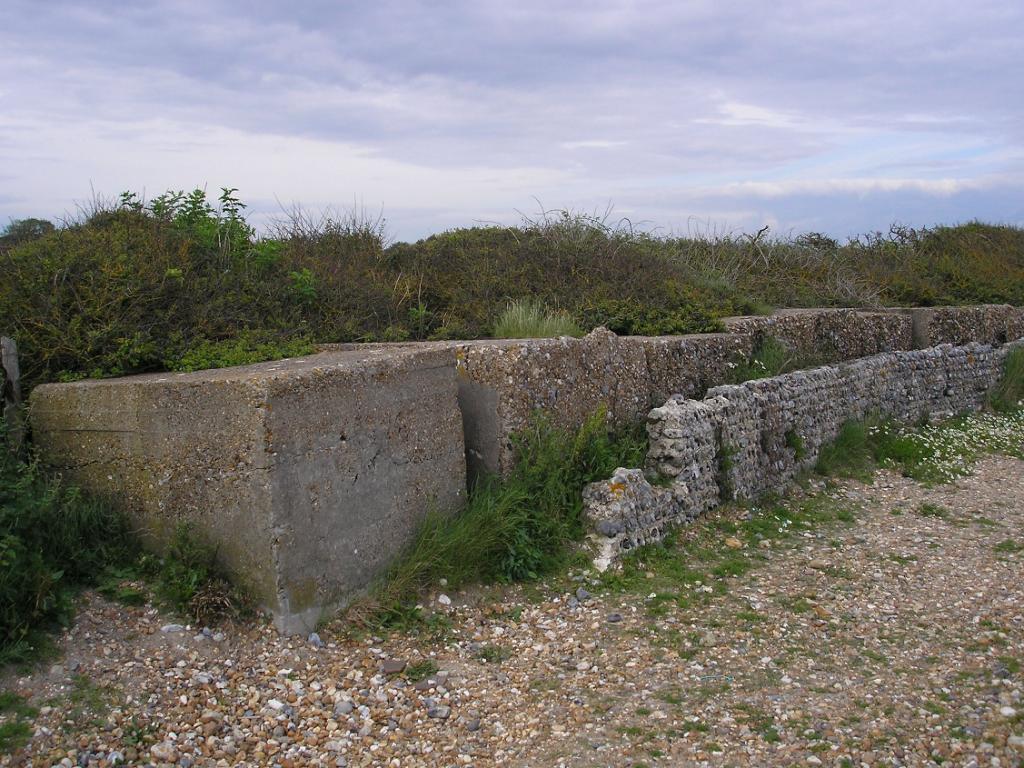
A good group of WWII anti-invasion defences are still visible along the beach between Elmer Sands and Littlehampton in Sussex. Walking from west to east, there is first a row of over 100 anti-tank blocks (www.flashearth.com/?lat=50.794593&lon=-0...&z=16.6&r=0&src="msl)." They are faced with a low flint wall:
This image is hidden for guests.
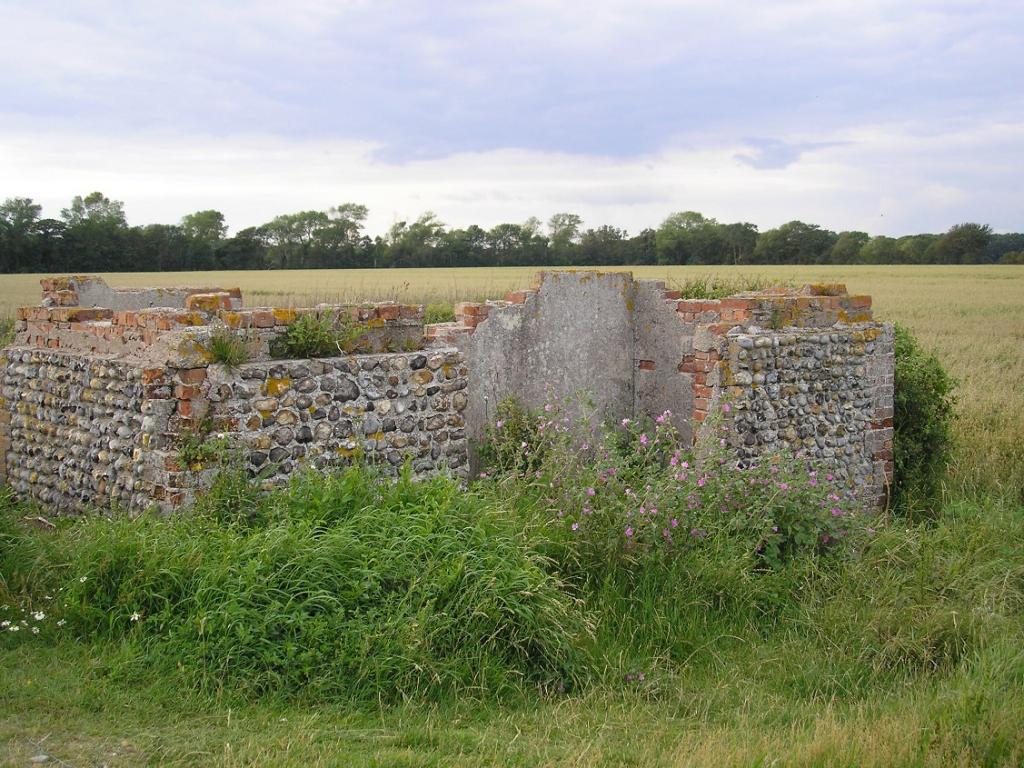
Nearby there is a small rectangular building (www.flashearth.com/?lat=50.795123&lon=-0...98&z=20&r=0&src="msl)," also faced in flint. There is a doorway in the west side, and a wide opening in the opposite side. It is presumably associated with the defences, and I would welcome any suggestions on its use.
This image is hidden for guests.
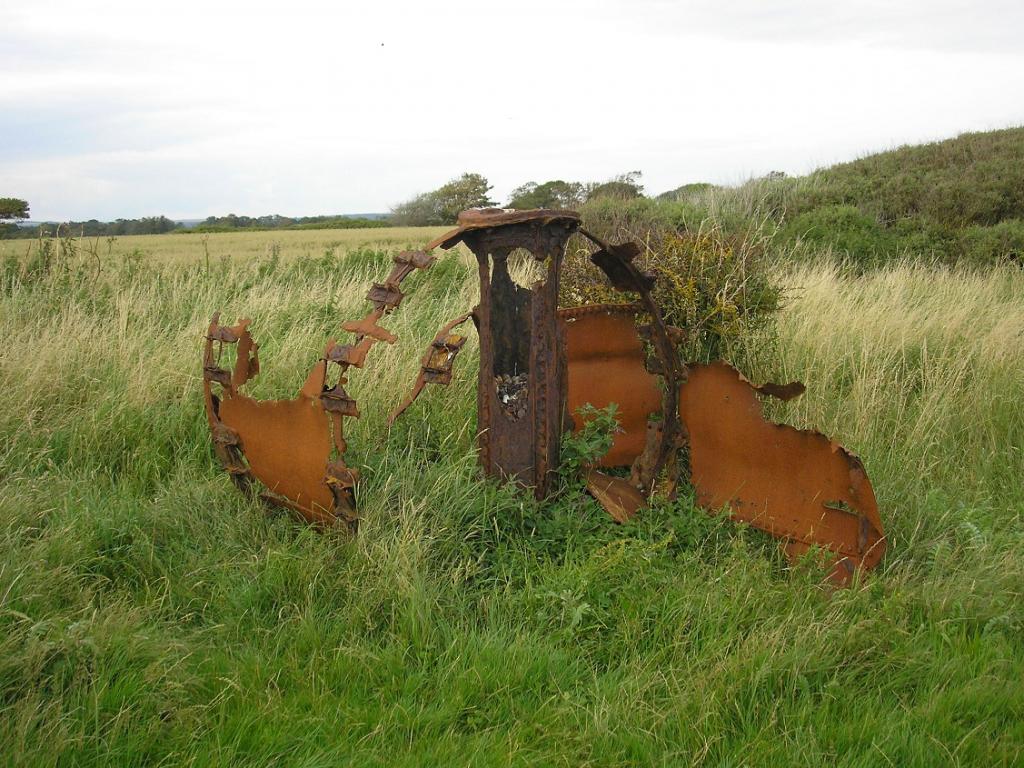
Further east again and just off the top of the beach is a rusty cylindrical item, clearly pretty old. It is perhaps just something associated with farming, but here is a photo in case someone recognises it as something more significant:
This image is hidden for guests.
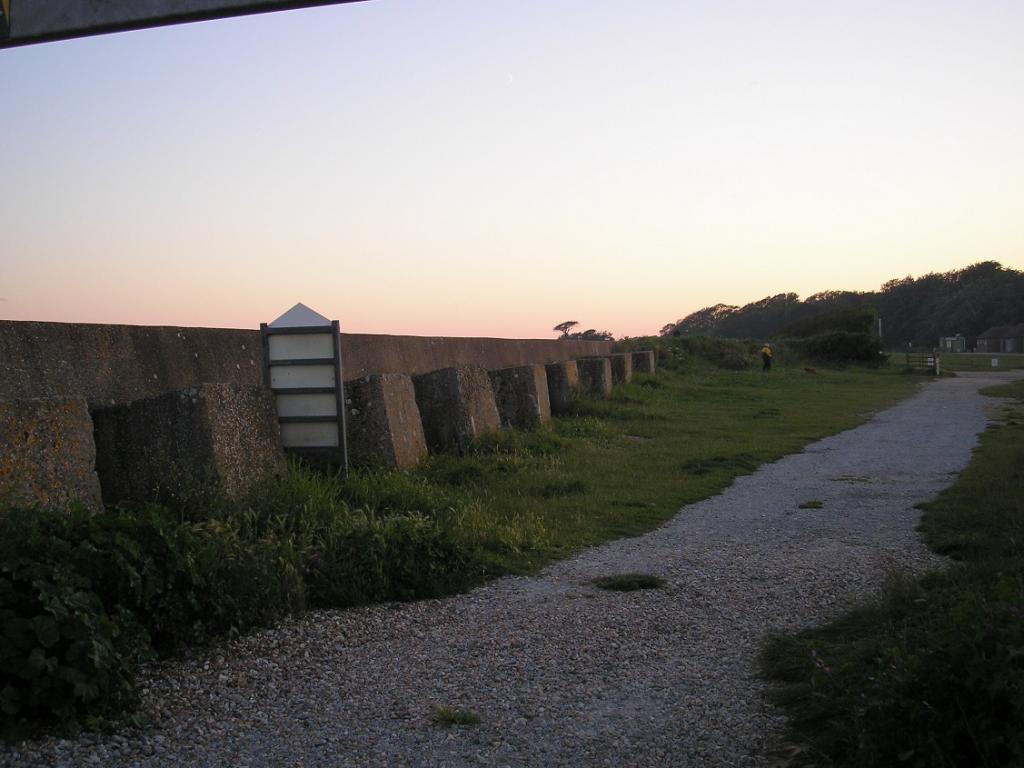
There are more anti-tank blocks near Climping Beach car park in Atherington:
This image is hidden for guests.
There was also a HAA battery in the vicinity.
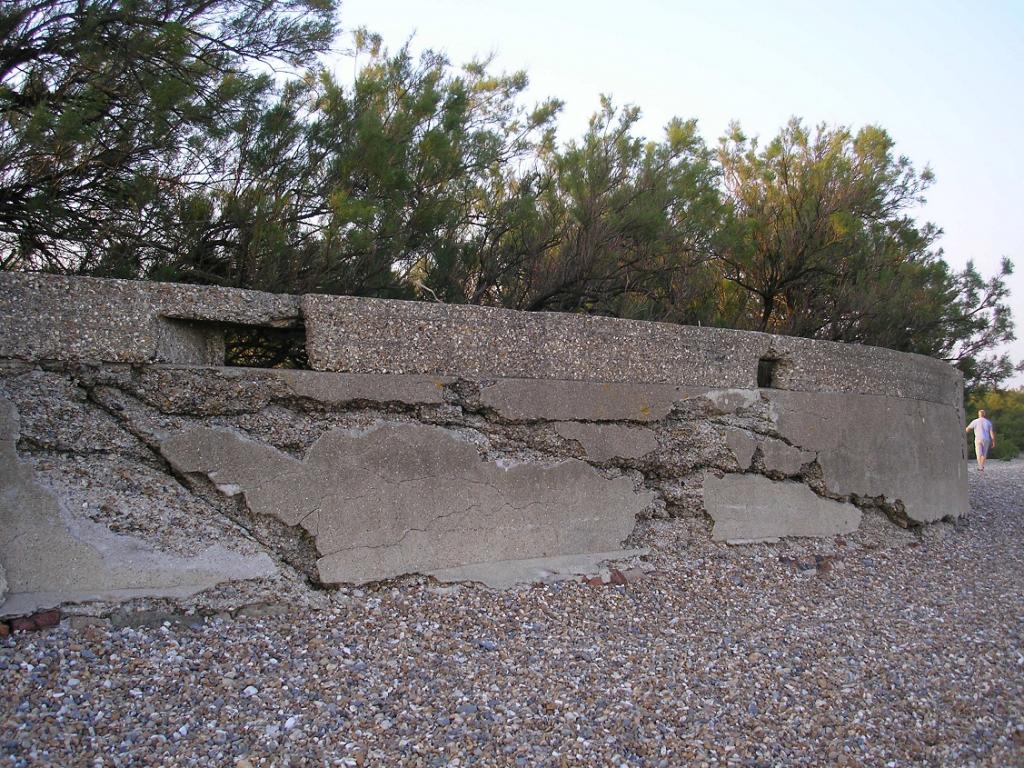
Between the car park and Climping Gap (where there are yet more anti-tank blocks) there is an interesting curved concrete wall with four gun loopholes (www.flashearth.com/?lat=50.799069&lon=-0...&z=19.2&r=0&src="msl):"
This image is hidden for guests.
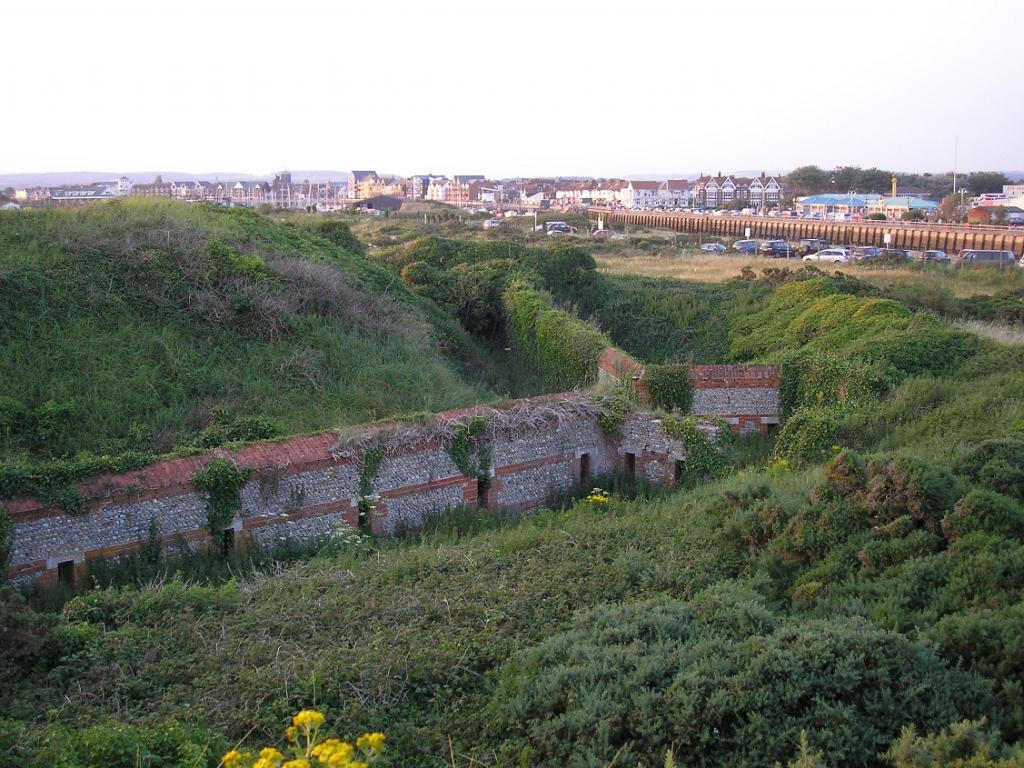
At the eastern edge of the beach (the River Arun prevents further progress by foot) stands Littlehampton Fort (www.flashearth.com/?lat=50.801097&lon=-0...&z=18.6&r=0&src="msl)." Built in 1854, it is particularly interesting because of its Carnot wall (at the bottom of the ditch):
This image is hidden for guests.
It was probably re-armed during WWII but I have no details. The rear barrack block which stood behind the cannon platform was removed in the 1950s.
There is also apparently an observation post consisting of a concrete bunker and a turret nearby on the beach, but I missed that.
This image is hidden for guests.
Please log in or register to see it.
Nearby there is a small rectangular building (www.flashearth.com/?lat=50.795123&lon=-0...98&z=20&r=0&src="msl)," also faced in flint. There is a doorway in the west side, and a wide opening in the opposite side. It is presumably associated with the defences, and I would welcome any suggestions on its use.
This image is hidden for guests.
Please log in or register to see it.
Further east again and just off the top of the beach is a rusty cylindrical item, clearly pretty old. It is perhaps just something associated with farming, but here is a photo in case someone recognises it as something more significant:
This image is hidden for guests.
Please log in or register to see it.
There are more anti-tank blocks near Climping Beach car park in Atherington:
This image is hidden for guests.
Please log in or register to see it.
There was also a HAA battery in the vicinity.
Between the car park and Climping Gap (where there are yet more anti-tank blocks) there is an interesting curved concrete wall with four gun loopholes (www.flashearth.com/?lat=50.799069&lon=-0...&z=19.2&r=0&src="msl):"
This image is hidden for guests.
Please log in or register to see it.
At the eastern edge of the beach (the River Arun prevents further progress by foot) stands Littlehampton Fort (www.flashearth.com/?lat=50.801097&lon=-0...&z=18.6&r=0&src="msl)." Built in 1854, it is particularly interesting because of its Carnot wall (at the bottom of the ditch):
This image is hidden for guests.
Please log in or register to see it.
It was probably re-armed during WWII but I have no details. The rear barrack block which stood behind the cannon platform was removed in the 1950s.
There is also apparently an observation post consisting of a concrete bunker and a turret nearby on the beach, but I missed that.
Please Log in or Create an account to join the conversation.
- the_historian
- Offline
- Junior Member
-

Less
More
- Posts: 47
- Thank you received: 3
28 Oct 2012 14:42 #2
by the_historian
Replied by the_historian on topic Climping Beach Anti-Invasion Defences
Photo 3 is the remains of an Allan Williams turret, number two could be the remains of a minewatcher's post I suppose.
Please Log in or Create an account to join the conversation.
- Alex Brown
- Offline
- Platinum Member
-

Less
More
- Posts: 2418
- Thank you received: 21
28 Oct 2012 15:18 #3
by Alex Brown
Not sure about that, there is nothing there that I recognise as part of an AWT. The metal seems far too thin.
Even if it was the sub-ground components of such I would be surprised.
Yes, I'm back(ish).
Replied by Alex Brown on topic Climping Beach Anti-Invasion Defences
Photo 3 is the remains of an Allan Williams turret
Not sure about that, there is nothing there that I recognise as part of an AWT. The metal seems far too thin.
Even if it was the sub-ground components of such I would be surprised.
Yes, I'm back(ish).
Please Log in or Create an account to join the conversation.
- HF Dave
-
Topic Author
- Offline
- Senior Member
-
Less
More
- Posts: 365
- Thank you received: 30
01 Nov 2012 19:36 #4
by HF Dave
Oh well, at least that photo has prompted some debate. Does anyone else think it could be part of an AWT, or any other sort of defensive structure for that matter?
Replied by HF Dave on topic Climping Beach Anti-Invasion Defences
Not sure about that, there is nothing there that I recognise as part of an AWT. The metal seems far too thin.
Even if it was the sub-ground components of such I would be surprised.
Oh well, at least that photo has prompted some debate. Does anyone else think it could be part of an AWT, or any other sort of defensive structure for that matter?
Please Log in or Create an account to join the conversation.
- Stampe
- Offline
- New Member
-

Less
More
- Posts: 1
- Thank you received: 0
24 Nov 2012 16:43 #5
by Stampe
Replied by Stampe on topic Climping Beach Anti-Invasion Defences
I have a feeling photo 3 is what remains of a helicopter. In this case the metal would be thin. If you look at the unit on top, it could be the head bearing for a helicopter rotor. The centre "post" is very substantial in diameter and could have contained the engine to drive the rotor and looking at it from the front, there is room either side for two seats and the frontal shape being so round seems to confirm this. The other thing that seems to help my reasoning is that Ford airfield is nearby and that rusty hulk could have been an approach or take-off accident. What can be seen in that field does not seem to tie in to an AWT - to me at any rate. It is not the right shape and as Arcade Al said, the metal is not thick enough.
Posted by Stampe
Posted by Stampe
Please Log in or Create an account to join the conversation.
- Alex Brown
- Offline
- Platinum Member
-
Less
More
- Posts: 2418
- Thank you received: 21
24 Nov 2012 19:59 #6
by Alex Brown
Yes, I'm back(ish).
Replied by Alex Brown on topic Climping Beach Anti-Invasion Defences
It looks like iron and steel though, so it's the wrong materials for anything that was ever designed to leave the ground!
Yes, I'm back(ish).
Please Log in or Create an account to join the conversation.
- PETERTHEEATER
-

- Offline
- Platinum Member
-
Less
More
- Posts: 10905
- Thank you received: 772
29 Nov 2012 08:36 #7
by PETERTHEEATER
Replied by PETERTHEEATER on topic Climping Beach Anti-Invasion Defences
....and the rivetting on that central pillar is definitely hot hammered 'dockyard' fashion.
But yes, I do see the resemblance to a helo with stringers and skinning but, as an aircraft maintainer, I know that light alloys (and now, composites) and not ferrous metals were and are used in aircraft construction.
But yes, I do see the resemblance to a helo with stringers and skinning but, as an aircraft maintainer, I know that light alloys (and now, composites) and not ferrous metals were and are used in aircraft construction.
Please Log in or Create an account to join the conversation.
- NickWilkins
- Offline
- New Member
-
Less
More
- Posts: 1
- Thank you received: 0
08 Nov 2023 09:50 #8
by NickWilkins
Replied by NickWilkins on topic Climping Beach Anti-Invasion Defences
Good morning.
Aware that this is an old post but I stumbled across it so for other people that do, a brief update on what these constructions actually are.
They 'are' coastal defences, but not in the way you imagine.
The entire complex stretches from Feltham on the western end where you started, through Climping and to West beach at the Littlehampton end of the structure.
It was built in Jan 1944 under total secrecy in preparation for Operation Fabius (4) which was carried out in May 1944.
Operation Fabius was a top secret rehearsal for the D Day landings in 4 main parts, each of which was constructed and built on beaches around the south coast to simulate each of the main beaches in France.
Fabius 1 was Slapton sands and was a mini mock up of Omaha Beach for the US infantry
Fabius 2 was on Hayling Island for British Infantry to rehearse the Sword Beach landing.
Fabius 3 was Bracklesham Bay for the Canadian Infantry rehearsing Juno Beach.
And Fabius 4 was the structures you see here, built on Littlehampton West beach and climping for the 3rd British infantry division to rehearse the landing on Gold Beach.
The concrete tank blocks, walls and the curved wall that is past the end of climping street with the gunnery windows was supposed to be a miniature mimic of the defences they were expecting on Gold beach.
The broken building, I don't know exactly what it was supposed to represent, but it was part of this secret training complex.
The rusting metal thing, I'm not so helpful with. I'm 56 at the time of writing (2023) and this has been here slowly rusting away for my entire living memory, but in WW2 this entire section of coast was filled with airfields, with Ford, Tangmere and West Hampnet (now known as Goodwood airfield) being the three immediate local ones, and I've always been told it was part of an aircraft that came down (of which they're were many) in these fields.
They were mostly manned with spitfires and hurricanes, and this is clearly not part of either of those, and I've I've never been able to determine exactly what part of what aircraft this is so it's always been a mystery.
With all the airfields around here you would think that there would be the remnants of a lot of AA batteries, but surprisingly not.
Most of those seemed to be further over towards Portsmouth or Worthing in the other direction with most of the large AA batteries along this part of the cost slightly further inland on the high ground of the south downs.
The fort by the mouth of the Arun in the last picture dates back to the late 1700s I think with most of the bigger parts being built around mid 1800 to protect ships sailing up the river to the harbour.
I believe there was an AA battery there during WW2 but it was completely removed after the war.
We used to play in the fort when I was a kid but it's now completely inaccessible and is supposedly awaiting refurbishment by the local authority.
Sadly this entire section of coast is now being lost to erosion and the entirety of this structure from end to end, known locally as the climping sea wall is now destroyed.
Aware that this is an old post but I stumbled across it so for other people that do, a brief update on what these constructions actually are.
They 'are' coastal defences, but not in the way you imagine.
The entire complex stretches from Feltham on the western end where you started, through Climping and to West beach at the Littlehampton end of the structure.
It was built in Jan 1944 under total secrecy in preparation for Operation Fabius (4) which was carried out in May 1944.
Operation Fabius was a top secret rehearsal for the D Day landings in 4 main parts, each of which was constructed and built on beaches around the south coast to simulate each of the main beaches in France.
Fabius 1 was Slapton sands and was a mini mock up of Omaha Beach for the US infantry
Fabius 2 was on Hayling Island for British Infantry to rehearse the Sword Beach landing.
Fabius 3 was Bracklesham Bay for the Canadian Infantry rehearsing Juno Beach.
And Fabius 4 was the structures you see here, built on Littlehampton West beach and climping for the 3rd British infantry division to rehearse the landing on Gold Beach.
The concrete tank blocks, walls and the curved wall that is past the end of climping street with the gunnery windows was supposed to be a miniature mimic of the defences they were expecting on Gold beach.
The broken building, I don't know exactly what it was supposed to represent, but it was part of this secret training complex.
The rusting metal thing, I'm not so helpful with. I'm 56 at the time of writing (2023) and this has been here slowly rusting away for my entire living memory, but in WW2 this entire section of coast was filled with airfields, with Ford, Tangmere and West Hampnet (now known as Goodwood airfield) being the three immediate local ones, and I've always been told it was part of an aircraft that came down (of which they're were many) in these fields.
They were mostly manned with spitfires and hurricanes, and this is clearly not part of either of those, and I've I've never been able to determine exactly what part of what aircraft this is so it's always been a mystery.
With all the airfields around here you would think that there would be the remnants of a lot of AA batteries, but surprisingly not.
Most of those seemed to be further over towards Portsmouth or Worthing in the other direction with most of the large AA batteries along this part of the cost slightly further inland on the high ground of the south downs.
The fort by the mouth of the Arun in the last picture dates back to the late 1700s I think with most of the bigger parts being built around mid 1800 to protect ships sailing up the river to the harbour.
I believe there was an AA battery there during WW2 but it was completely removed after the war.
We used to play in the fort when I was a kid but it's now completely inaccessible and is supposedly awaiting refurbishment by the local authority.
Sadly this entire section of coast is now being lost to erosion and the entirety of this structure from end to end, known locally as the climping sea wall is now destroyed.
Please Log in or Create an account to join the conversation.
- Forum
- Open Forum
- Miscellaneous Research Topics
- General Airfield or 20th Century Military Architecture Discussion Topics
- Climping Beach Anti-Invasion Defences
Time to create page: 0.056 seconds