- Posts: 5026
- Thank you received: 440
- Forum
- Open Forum
- Miscellaneous Research Topics
- General Airfield or 20th Century Military Architecture Discussion Topics
- Air Ministry and other Government WWII dispersals
Air Ministry and other Government WWII dispersals
- carnaby
-
 Topic Author
- Offline
- Platinum Member
-

Less
More
02 Mar 2010 09:34 - 24 Jan 2018 17:41 #1
by carnaby
Plan A is always more effective when the problem you are working on understands that Plan B will involve the use of dynamite
Air Ministry and other Government WWII dispersals was created by carnaby
On 1 January 1940 Goering announced, 'The German Air Force will strike at Britain with such an onslaught as has never been known in the history of the world...' With the possibility of London being flattened an elaborate system was in place to move government departments into the provinces. These schemes were known as the Black, Yellow, Blue, and Grey Plans. They were top secret at the time and ran in parallel with another scheme - the North-West Surburban Plan, which would move key military personnel to the Harrow / Neasden area of London.
Generally personnel who were not directly responsible for the day-to-day running of the war (Personnel, Accounts etc) would relocate to the provinces, while key departments (e.g. Intelligence, Operations) would remain 'close to Whitehall'.
Air Ministry staff would initially locate to:
Code letters and staffing levels are shown.
Worcester became the principal AM site, with an extensive telephone network being available at the vast 25MU Hartlebury.
Many sections of the Ministry of Aircraft Production moved to Harrogate.
Initially hotel office accommodation was used, but a more efficient solution was needed.
Graham
Generally personnel who were not directly responsible for the day-to-day running of the war (Personnel, Accounts etc) would relocate to the provinces, while key departments (e.g. Intelligence, Operations) would remain 'close to Whitehall'.
Air Ministry staff would initially locate to:
| Bath AA (209) | Bristol AJ (102) | Bromsgrove GA (102) | |
| Cirencester JK (602) | Gloucester CJ (1,055) | Stroud QA (734) | |
| Tetbury JJ (634) | Warwick HJ (1,100) | Worcester OA (1,239) |
Code letters and staffing levels are shown.
Worcester became the principal AM site, with an extensive telephone network being available at the vast 25MU Hartlebury.
Many sections of the Ministry of Aircraft Production moved to Harrogate.
Initially hotel office accommodation was used, but a more efficient solution was needed.
Graham
Plan A is always more effective when the problem you are working on understands that Plan B will involve the use of dynamite
Last edit: 24 Jan 2018 17:41 by carnaby. Reason: Reformatted
Please Log in or Create an account to join the conversation.
- carnaby
-
Topic Author
- Offline
- Platinum Member
-
Less
More
- Posts: 5026
- Thank you received: 440
02 Mar 2010 10:23 - 27 Jan 2018 11:00 #2
by carnaby
Plan A is always more effective when the problem you are working on understands that Plan B will involve the use of dynamite
This message has attachments images.
Replied by carnaby on topic Air Ministry and other Government WWII dispersals
The Temporary Office Building (TOB)
The probability of mass staff evacuation from London required the rapid construction of extensive office accommodation in the provinces. By 1940 a new type of building had been designed by Sir James West for the Ministry of Works, and constructed in groups, generally on the outskirts of towns. This building was a steel-framed single-storey brick and concrete construction, having a central spine with a central reception area, and twelve wings. The corridors within the spine were made wide enough such that the building could easily be converted into a hospital, or other premises should the need arise.
These buildings were so successful that many are still in use today. Some time after WWII they were renamed the Standard Office Buildings (SOB).
Between one and six blocks were built at each site, three being the average, however space was always reserved for additional construction. A separate canteen building was located on each site of more than one block.
The first unit available for use was at Redhill, Worcester in June 1940, and a further eleven had been completed across the UK by the end of the year. Three such sites were eventually allocated to the Air Ministry, two initially in Worcester and a third at Harrogate.
Below: The ex Air Ministry site at Redhill. Worcester. Three TOBs and a Canteen Block. LINK
Below: ex AM TOB at Henwick, now used by the University of Worcester. LINK
Below:The Harrogate site was also used by the Post Office. It was demolished recently. LINK
The Admiralty had three large sites in Bath - Foxhill, Ensleigh, and Warminster Road. The first two are still in use by the MoD / DLO. The third site is Accounts and has been threatened with closure for several years. The War Office had two sites in Cheltenham. The TOBS surrounding GCHQ were demolished a few years ago.
Graham
The probability of mass staff evacuation from London required the rapid construction of extensive office accommodation in the provinces. By 1940 a new type of building had been designed by Sir James West for the Ministry of Works, and constructed in groups, generally on the outskirts of towns. This building was a steel-framed single-storey brick and concrete construction, having a central spine with a central reception area, and twelve wings. The corridors within the spine were made wide enough such that the building could easily be converted into a hospital, or other premises should the need arise.
These buildings were so successful that many are still in use today. Some time after WWII they were renamed the Standard Office Buildings (SOB).
Between one and six blocks were built at each site, three being the average, however space was always reserved for additional construction. A separate canteen building was located on each site of more than one block.
The first unit available for use was at Redhill, Worcester in June 1940, and a further eleven had been completed across the UK by the end of the year. Three such sites were eventually allocated to the Air Ministry, two initially in Worcester and a third at Harrogate.
Below: The ex Air Ministry site at Redhill. Worcester. Three TOBs and a Canteen Block. LINK
Below: ex AM TOB at Henwick, now used by the University of Worcester. LINK
Below:The Harrogate site was also used by the Post Office. It was demolished recently. LINK
The Admiralty had three large sites in Bath - Foxhill, Ensleigh, and Warminster Road. The first two are still in use by the MoD / DLO. The third site is Accounts and has been threatened with closure for several years. The War Office had two sites in Cheltenham. The TOBS surrounding GCHQ were demolished a few years ago.
Graham
Plan A is always more effective when the problem you are working on understands that Plan B will involve the use of dynamite
This message has attachments images.
Please log in or register to see it.
Last edit: 27 Jan 2018 11:00 by carnaby. Reason: De-photobucketed
Please Log in or Create an account to join the conversation.
- WJT
- Visitor
-

02 Mar 2010 11:36 #3
by WJT
Replied by WJT on topic Air Ministry and other Government WWII dispersals
Chessington as well? I remember visiting Defence lands there in the mid 1980s, which I am sure had the look of a TOB (or could it have been a former hospital?
... and Harrogate as well? I remember visiting a number of the finance branches there, especiallt F6(Air), which held the purse strings for aircraft spares amongst many other things. A lot of the RAF Supply staffs found themslves posted to Harrogate and if I remember correctly, a lot of the Tornado supply support was provided from Harrogate in the early days of this now venerable aircraft's life. I seem to remember BT on part of the site during my visits during the Tornado introduction to service.
... and Harrogate as well? I remember visiting a number of the finance branches there, especiallt F6(Air), which held the purse strings for aircraft spares amongst many other things. A lot of the RAF Supply staffs found themslves posted to Harrogate and if I remember correctly, a lot of the Tornado supply support was provided from Harrogate in the early days of this now venerable aircraft's life. I seem to remember BT on part of the site during my visits during the Tornado introduction to service.
Please Log in or Create an account to join the conversation.
- Peter Kirk
-

- Offline
- Moderator
-

Less
More
- Posts: 12446
- Thank you received: 1029
02 Mar 2010 13:03 #4
by Peter Kirk
No Amount Of Evidence Will Ever Persuade An Idiot (probably not Mark Twain)
Replied by Peter Kirk on topic Air Ministry and other Government WWII dispersals
Interesting. Those pictured are nothing like the ones I remember in Eltham.
I will keep looking though but it looks like mine might not be built for the same purpose.
I will keep looking though but it looks like mine might not be built for the same purpose.
No Amount Of Evidence Will Ever Persuade An Idiot (probably not Mark Twain)
Please Log in or Create an account to join the conversation.
- P Bellamy
-

- Offline
- Platinum Member
-
Less
More
- Posts: 4566
- Thank you received: 323
02 Mar 2010 13:38 - 27 Dec 2017 18:43 #5
by P Bellamy
Paul Bellamy
This message has an attachment image.
Replied by P Bellamy on topic Air Ministry and other Government WWII dispersals
There's this five-TOB site off Heyhouses Lane at Lytham St. Annes:
This image is hidden for guests.
All five blocks and the canteen are still standing with later extensions, marked on the current OS maps as the ubiquitous "Government Offices".
Browsing back up the thread, the layout of the buildings, and even the boundary hedge and nearby roads looks very similar to the first illustration:
All the best,
PB
This image is hidden for guests.
Please log in or register to see it.
All five blocks and the canteen are still standing with later extensions, marked on the current OS maps as the ubiquitous "Government Offices".
Browsing back up the thread, the layout of the buildings, and even the boundary hedge and nearby roads looks very similar to the first illustration:
All the best,
PB
Paul Bellamy
This message has an attachment image.
Please log in or register to see it.
Last edit: 27 Dec 2017 18:43 by carnaby. Reason: Part De-photobucketed
Please Log in or Create an account to join the conversation.
- ted angus
- Offline
- Platinum Member
-
Less
More
- Posts: 1643
- Thank you received: 51
02 Mar 2010 15:44 - 26 Oct 2020 21:26 #6
by ted angus
I was stationed at RAF Chessington in 1985, the Defence lands complex known to us as MoD Chessington was fully active then; It came up fairly close to the RAF Chessington buildings and can be seen in the south east corner of the aerial picture in the Barrage balloon depot thread, but was a seperate site. I have copied it here for ease of reference.
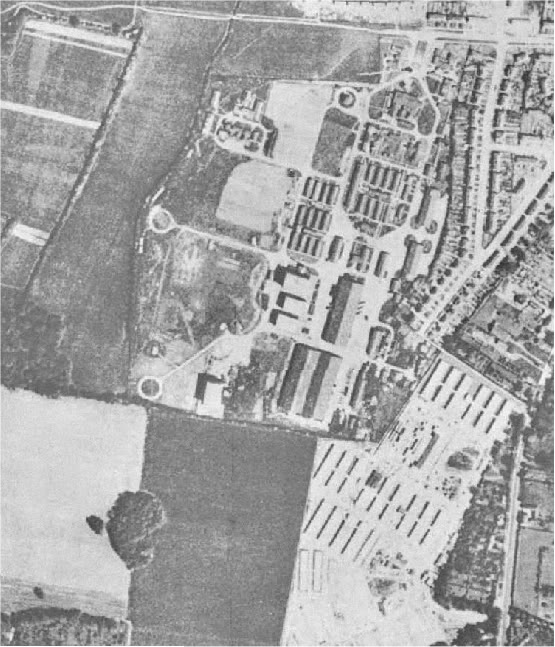
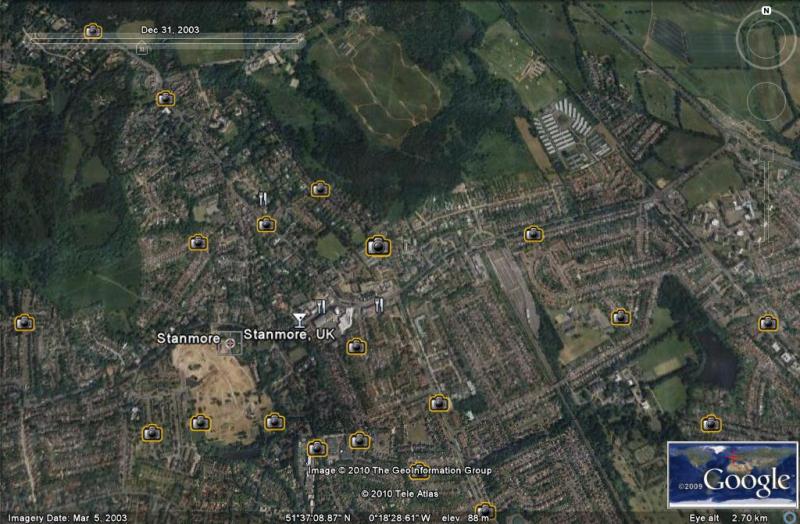
The other complex I am aware of was known to us as RAF Stanmore I visited the site in late 1985 to obtain some archive material from the RAF inspectorate of Recruiting who were based there. I have pulled the attached from a GE historical image which shows the RAF Stanmore PARK site after clearance and the RAF Stanmore ( north east corner of image) site just before it too was demolished for housing.
The Harrogate site was occupied by the branches I dealt with for GSE /workshops spares etc, it undertook much of the current task of the IPTs currently at Wyton/Brampton.
TED
Attached files
This image is hidden for guests.
This image is hidden for guests.
Replied by ted angus on topic Air Ministry and other Government WWII dispersals
Chessington as well? I remember visiting Defence lands there in the mid 1980s, which I am sure had the look of a TOB (or could it have been a former hospital?
... and Harrogate as well? I remember visiting a number of the finance branches there, especiallt F6(Air), which held the purse strings for aircraft spares amongst many other things. A lot of the RAF Supply staffs found themslves posted to Harrogate and if I remember correctly, a lot of the Tornado supply support was provided from Harrogate in the early days of this now venerable aircraft's life. I seem to remember BT on part of the site during my visits during the Tornado introduction to service.
I was stationed at RAF Chessington in 1985, the Defence lands complex known to us as MoD Chessington was fully active then; It came up fairly close to the RAF Chessington buildings and can be seen in the south east corner of the aerial picture in the Barrage balloon depot thread, but was a seperate site. I have copied it here for ease of reference.
The other complex I am aware of was known to us as RAF Stanmore I visited the site in late 1985 to obtain some archive material from the RAF inspectorate of Recruiting who were based there. I have pulled the attached from a GE historical image which shows the RAF Stanmore PARK site after clearance and the RAF Stanmore ( north east corner of image) site just before it too was demolished for housing.
The Harrogate site was occupied by the branches I dealt with for GSE /workshops spares etc, it undertook much of the current task of the IPTs currently at Wyton/Brampton.
TED
Attached files
This image is hidden for guests.
Please log in or register to see it.
This image is hidden for guests.
Please log in or register to see it.
Last edit: 26 Oct 2020 21:26 by Peter Kirk.
Please Log in or Create an account to join the conversation.
- Peter Kirk
-
- Offline
- Moderator
-
Less
More
- Posts: 12446
- Thank you received: 1029
02 Mar 2010 16:42 #7
by Peter Kirk
No Amount Of Evidence Will Ever Persuade An Idiot (probably not Mark Twain)
Replied by Peter Kirk on topic Air Ministry and other Government WWII dispersals
I have seen this type of site many times on my trawls through air photos online but always assumed them to be hospitals or similar.
Are these recorded on any monument databases and if so what are they categories as?
Are these recorded on any monument databases and if so what are they categories as?
No Amount Of Evidence Will Ever Persuade An Idiot (probably not Mark Twain)
Please Log in or Create an account to join the conversation.
- carnaby
-
Topic Author
- Offline
- Platinum Member
-
Less
More
- Posts: 5026
- Thank you received: 440
02 Mar 2010 17:33 #8
by carnaby
Plan A is always more effective when the problem you are working on understands that Plan B will involve the use of dynamite
Replied by carnaby on topic Air Ministry and other Government WWII dispersals
The information below is from what was officially known as 'Miss Sharpe's List' (source: various TNA Treasury files). Her job was to catalogue the TOB useage towards the end of WWII regarding future requirements.
The number of TOBs are shown for each site, together with the departments and ministries which occupied them. Each TOB was rated at 400 staff, and 17,000 civil servants were accommodated c.1944. Spa towns were favourites for relocation, as it was known that the local populace was accustomed to receiving large numbers of temporary residents.
Bath (14) Admiralty
Blackpool (8 ) Pensions, Health, War Transport, Customs & Excise, HC for India
Birmingham (1) Fuel. Supply / Timber Control
Bristol (1) Supply / Home Grown Timber Link
Buxton (?) Customs & Excise
Cambridge (1) Works. Pensions
Cardiff / Llandaff (1) War Transport, Seamen's Registry
Cheltenham (12) War Office, US Army SoS.
Colwyn Bay (1) Food
Droitwich (5) War Office, RA Pay Corps
Gloucester (6) Air Ministry
Harrogate (6) Aircraft Production, Post Office
Liverpool (?) War Office
Llandudno (?) Inland Revenue
Leeds (2) Works, Home Security
London / Bushy Park (4) USAAF (8th)
London / Osterley (2) Board of Trade, Ordnance Survey
London / Stanmore (2.33) Government Communications
London / Eastcote (3) Government Communications.
Malvern (12) Admiralty, Supply
Manchester (2) Postal & Telegraph Censorship, Fuel, Works
Nottingham (2) Works, Labour
Oxford (1) Food. Admiralty, Home Office
Newcastle (1) Fuel, Aircraft Production, Works
Preston (1) Works, Labour
Reading (2) Works, Fuel, Pensions
Rhyl (?) Works
St Annes (5) Pensions, War Transport, Fuel & Power, Agriculture & Fisheries
Southport (?) Registrar General, Labour Assistance Board
Tunbridge Wells (1) Pensions, Works
Worcester (6) Air Ministry
Post WWII - Accommodation was urgently required for all government staff returning from their wartime locations and a large number of SOBs (later design of TOB) were constructed between 1946 and 1949 in the following suburbs:
Bromley, Chessington, Epsom, Ewell, Hatch End, Kidbrooke, Mottingham, Northwood, Orpington, Ruislip Stanmore, West Wickham, Tolworth / Surbiton (Toby Jug / Alpine Avenue)
Construction took place at other cities, e.g. Bristol / Brislington - 2 SOBs plus standard canteen.
It is known that the list is incomplete, and will be updated occasionally.
The thread title has been amended accordingly
Graham
The number of TOBs are shown for each site, together with the departments and ministries which occupied them. Each TOB was rated at 400 staff, and 17,000 civil servants were accommodated c.1944. Spa towns were favourites for relocation, as it was known that the local populace was accustomed to receiving large numbers of temporary residents.
Bath (14) Admiralty
Blackpool (8 ) Pensions, Health, War Transport, Customs & Excise, HC for India
Birmingham (1) Fuel. Supply / Timber Control
Bristol (1) Supply / Home Grown Timber Link
Buxton (?) Customs & Excise
Cambridge (1) Works. Pensions
Cardiff / Llandaff (1) War Transport, Seamen's Registry
Cheltenham (12) War Office, US Army SoS.
Colwyn Bay (1) Food
Droitwich (5) War Office, RA Pay Corps
Gloucester (6) Air Ministry
Harrogate (6) Aircraft Production, Post Office
Liverpool (?) War Office
Llandudno (?) Inland Revenue
Leeds (2) Works, Home Security
London / Bushy Park (4) USAAF (8th)
London / Osterley (2) Board of Trade, Ordnance Survey
London / Stanmore (2.33) Government Communications
London / Eastcote (3) Government Communications.
Malvern (12) Admiralty, Supply
Manchester (2) Postal & Telegraph Censorship, Fuel, Works
Nottingham (2) Works, Labour
Oxford (1) Food. Admiralty, Home Office
Newcastle (1) Fuel, Aircraft Production, Works
Preston (1) Works, Labour
Reading (2) Works, Fuel, Pensions
Rhyl (?) Works
St Annes (5) Pensions, War Transport, Fuel & Power, Agriculture & Fisheries
Southport (?) Registrar General, Labour Assistance Board
Tunbridge Wells (1) Pensions, Works
Worcester (6) Air Ministry
Post WWII - Accommodation was urgently required for all government staff returning from their wartime locations and a large number of SOBs (later design of TOB) were constructed between 1946 and 1949 in the following suburbs:
Bromley, Chessington, Epsom, Ewell, Hatch End, Kidbrooke, Mottingham, Northwood, Orpington, Ruislip Stanmore, West Wickham, Tolworth / Surbiton (Toby Jug / Alpine Avenue)
Construction took place at other cities, e.g. Bristol / Brislington - 2 SOBs plus standard canteen.
It is known that the list is incomplete, and will be updated occasionally.
The thread title has been amended accordingly
Graham
Plan A is always more effective when the problem you are working on understands that Plan B will involve the use of dynamite
Please Log in or Create an account to join the conversation.
- Peter Kirk
-
- Offline
- Moderator
-
Less
More
- Posts: 12446
- Thank you received: 1029
02 Mar 2010 17:45 #9
by Peter Kirk
No Amount Of Evidence Will Ever Persuade An Idiot (probably not Mark Twain)
Replied by Peter Kirk on topic Air Ministry and other Government WWII dispersals
Splendid stuff Graham. The last bit answers my question. Mottingham was obviously a postwar site along with Bromley, Kidbrooke and Orpington which I believe were the ones I remember.
My post here shows the Mottingham site in 1958. This was brick built.
/community/showpost.php?p=40802&postcount=10
My post here shows the Mottingham site in 1958. This was brick built.
/community/showpost.php?p=40802&postcount=10
No Amount Of Evidence Will Ever Persuade An Idiot (probably not Mark Twain)
Please Log in or Create an account to join the conversation.
- Paul Francis
-

- Offline
- Moderator
-
Less
More
- Posts: 5843
- Thank you received: 567
02 Mar 2010 18:12 #10
by Paul Francis
You can tell a builder from an archaeologist by the size of his trowel. Mine is a small one!
Replied by Paul Francis on topic Air Ministry and other Government WWII dispersals
Well Peter I did say Mr Carnaby was (is) the expert but English Heritage should take some credit too, as it was a project for them that this data has come to light. Perhaps we need the list in the audits too.
You can tell a builder from an archaeologist by the size of his trowel. Mine is a small one!
Please Log in or Create an account to join the conversation.
- Forum
- Open Forum
- Miscellaneous Research Topics
- General Airfield or 20th Century Military Architecture Discussion Topics
- Air Ministry and other Government WWII dispersals
Time to create page: 0.053 seconds