- Posts: 407
- Thank you received: 2
- Forum
- Open Forum
- Miscellaneous Research Topics
- Research Material, Websites and Useful Links
- British Nuclear Weapons info
British Nuclear Weapons info
- WJT
- Visitor
-

15 Feb 2011 11:27 #21
by WJT
Replied by WJT on topic British Nuclear Weapons info
Ted: I think the credit note would have been char grilled!
Anyway, the AP. I do not have a complete copy. I managed to photocopy a page or two just after we opened up at Brawdy in approx 74. The only copier in Eng Wing was in the Adjt's office so it was hard to get anything in those days. Indeed, by modern standards the copy is so bad that it is hardly readable. As a result, I do not have any data on the Vulcan power pack.
As for the maximum loading of 14,000 lbs, that is presumably the requirement for two Vulcan bomb beams each with seven 1,000-pounders.
Anyway, the AP. I do not have a complete copy. I managed to photocopy a page or two just after we opened up at Brawdy in approx 74. The only copier in Eng Wing was in the Adjt's office so it was hard to get anything in those days. Indeed, by modern standards the copy is so bad that it is hardly readable. As a result, I do not have any data on the Vulcan power pack.
As for the maximum loading of 14,000 lbs, that is presumably the requirement for two Vulcan bomb beams each with seven 1,000-pounders.
Please Log in or Create an account to join the conversation.
- superplum
-

- Offline
- Premium Member
-

Less
More
15 Feb 2011 11:39 #22
by superplum
Just a point of clarification, we tended not to have any "practice" rounds in the field of NW.
Types were Operational, Drill and Surveillance. Operational speaks for itself, Drills were used for all ground training but were not cleared for flight, Surveillance were used for mirroring the transportation, in-service storage and maintenance environments, and could culminate in flight carriage and release.
Replied by superplum on topic British Nuclear Weapons info
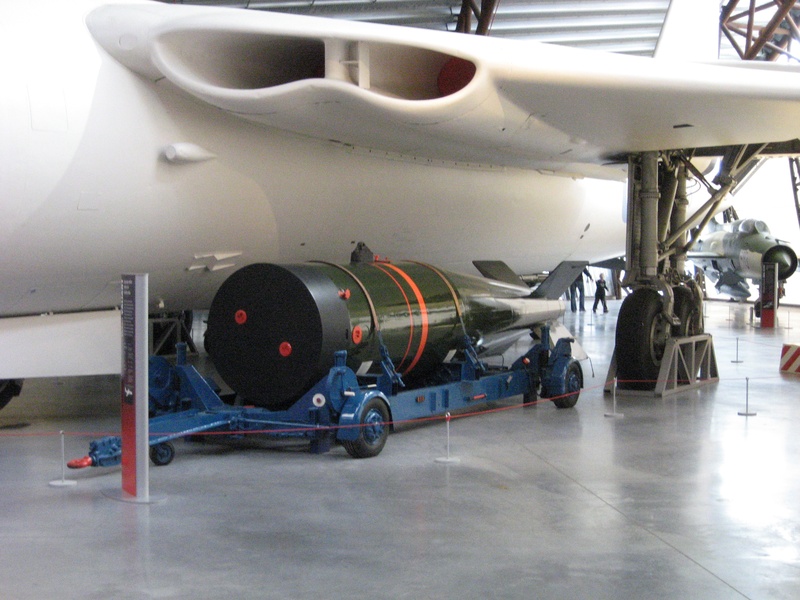
It's a Yellow sun practice round.
Dosn't say what Mk.
All the nukes at Cosford seem to be practice rounds.
At Hack green as a contrast they all seem to be deactivated:-o
Just a point of clarification, we tended not to have any "practice" rounds in the field of NW.
Types were Operational, Drill and Surveillance. Operational speaks for itself, Drills were used for all ground training but were not cleared for flight, Surveillance were used for mirroring the transportation, in-service storage and maintenance environments, and could culminate in flight carriage and release.
Please Log in or Create an account to join the conversation.
- PETERTHEEATER
-
- Offline
- Platinum Member
-

Less
More
- Posts: 10905
- Thank you received: 772
16 Feb 2011 02:00 #23
by PETERTHEEATER
Replied by PETERTHEEATER on topic British Nuclear Weapons info
Richard wrote (Post #20)
By the way the use of SABT's and GSE's etc. Any chance of saying what they mean to us none military types??? Probably obvious though.
Why were the bombs different for each V bomber as you would have thought the specifications for the bombers would have been similar???
SABT has been explained. GSE is Ground Support Equipment (sometimes Ground Servicing Equipment)
Nuclear bombs were not different for each 'V' Bomber type, the same type of bomb could be carried by any of the 'V's but operational policy determined what type and quantity of bombs each unit held and, the development of bombs and physics packages was rapid resulting in a short in-service life of each bomb/package type.
By the way the use of SABT's and GSE's etc. Any chance of saying what they mean to us none military types??? Probably obvious though.
Why were the bombs different for each V bomber as you would have thought the specifications for the bombers would have been similar???
SABT has been explained. GSE is Ground Support Equipment (sometimes Ground Servicing Equipment)
Nuclear bombs were not different for each 'V' Bomber type, the same type of bomb could be carried by any of the 'V's but operational policy determined what type and quantity of bombs each unit held and, the development of bombs and physics packages was rapid resulting in a short in-service life of each bomb/package type.
Please Log in or Create an account to join the conversation.
- Richard Drew
-

- Offline
- Elite Member
-

Less
More
- Posts: 1181
- Thank you received: 13
16 Feb 2011 11:27 #24
by Richard Drew
Richard
www.atlantikwall.co.uk
Replied by Richard Drew on topic British Nuclear Weapons info
Thanks Peter I see where they are coming from. I suppose technology was rocketing and I cannot imagine how the old string bag RAF senior ranks managed to keep up.
Also the last Lincoln leaving the factory and the first Victors being produced. I am not sure if they were made in the same factory? but the advance from a four piston engined aircraft to a four jet type was a fantastic leap forward. Actually we visited Hurn when the last Viscount being readied for a Chinese air line and the first BAC111 was almost ready.
Also the last Lincoln leaving the factory and the first Victors being produced. I am not sure if they were made in the same factory? but the advance from a four piston engined aircraft to a four jet type was a fantastic leap forward. Actually we visited Hurn when the last Viscount being readied for a Chinese air line and the first BAC111 was almost ready.
Richard
www.atlantikwall.co.uk
Please Log in or Create an account to join the conversation.
- ted angus
- Offline
- Platinum Member
-
Less
More
- Posts: 1643
- Thank you received: 51
16 Feb 2011 12:10 #25
by ted angus
Sorry forgot to mention GSE when I joined in 64 it was simply GE Ground Equipment . It then became GSE. Tornado GSE was called AGE Aerospace Ground Equipment For Typoon I'm not sure must ask the boys next time I am down the big flying club if its still open !!
Replied by ted angus on topic British Nuclear Weapons info
Richard wrote (Post #20)
By the way the use of SABT's and GSE's etc. Any chance of saying what they mean to us none military types??? Probably obvious though.
Why were the bombs different for each V bomber as you would have thought the specifications for the bombers would have been similar???
SABT has been explained. GSE is Ground Support Equipment (sometimes Ground Servicing Equipment)
Nuclear bombs were not different for each 'V' Bomber type, the same type of bomb could be carried by any of the 'V's but operational policy determined what type and quantity of bombs each unit held and, the development of bombs and physics packages was rapid resulting in a short in-service life of each bomb/package type.
Sorry forgot to mention GSE when I joined in 64 it was simply GE Ground Equipment . It then became GSE. Tornado GSE was called AGE Aerospace Ground Equipment For Typoon I'm not sure must ask the boys next time I am down the big flying club if its still open !!
Please Log in or Create an account to join the conversation.
- ColinA
- Topic Author
- Offline
- Junior Member
-

Less
More
- Posts: 43
- Thank you received: 3
16 Feb 2011 16:02 #26
by ColinA
Replied by ColinA on topic British Nuclear Weapons info
Ok
For completeness Uk Nuclear bomb casings.
Casings were retained to simplify handling equipment & aircraft attatchment.
First Blue Danube
A proven drop shape based on Barnes Wallis's work.
An accurate weapon but very fast fall speed which did not give the delivery aircraft much time to get clear.
The large casing was required to contain early core designs.
This image is hidden for guests.
Second Red Beard
A smalled diameter casing suitable for use on smaller aircraft
This casing was used with several physics cores both Uk made & USA loan.
[IMG]/community/68467=4088-red beard.jpg[/img]
Third Yellow Sun
Used with several cores from large 400Kt bombs (the ones with ball bearings in them for safety)
Later deployed with US designed Mk28 thermonuclear device and others.
The flat nose was a British feature which did away with the parachutes to slow the fall of the bomb.
Descriptions from Orfordness say the bomb "rumbled" as it fell.
This image is hidden for guests.
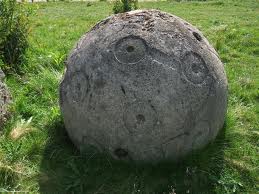
For interest a concrete core which must have been used for drop testing.
Notice 32 fuse pockets.
No real scale but about the correct size for an Orange Herald core.
This image is hidden for guests.
Final weapon was WE177 which used different cores.
For completeness Uk Nuclear bomb casings.
Casings were retained to simplify handling equipment & aircraft attatchment.
First Blue Danube
A proven drop shape based on Barnes Wallis's work.
An accurate weapon but very fast fall speed which did not give the delivery aircraft much time to get clear.
The large casing was required to contain early core designs.
This image is hidden for guests.
Please log in or register to see it.
Second Red Beard
A smalled diameter casing suitable for use on smaller aircraft
This casing was used with several physics cores both Uk made & USA loan.
[IMG]/community/68467=4088-red beard.jpg[/img]
Third Yellow Sun
Used with several cores from large 400Kt bombs (the ones with ball bearings in them for safety)
Later deployed with US designed Mk28 thermonuclear device and others.
The flat nose was a British feature which did away with the parachutes to slow the fall of the bomb.
Descriptions from Orfordness say the bomb "rumbled" as it fell.
This image is hidden for guests.
Please log in or register to see it.
For interest a concrete core which must have been used for drop testing.
Notice 32 fuse pockets.
No real scale but about the correct size for an Orange Herald core.
This image is hidden for guests.
Please log in or register to see it.
Final weapon was WE177 which used different cores.
Please Log in or Create an account to join the conversation.
- Bri21
- Offline
- New Member
-

Less
More
- Posts: 7
- Thank you received: 0
18 Feb 2011 01:48 #27
by Bri21
The issue with the high speed was not aircraft safety, but that the transonic shock waves buggered up the barometric altimeter used as a 'gate' to activate the radar altimeter used to detonate the weapon at a fixed height AGL. The fear was that if the radar was switched on at release it would be vulnerable to countermeasures. Because the barometrics were such a bugger, the ball bearing monster, Violet Club discarded baro and a clockwork gate mechanism was substituted.
USA loan? No way!
That was Project E, a totally different issue not related to Red Beard. And US law prohibited handing over US nuclear weapons to foreigners. That's why they were always kept secure by US custodians until required for use and released by Presidential order. Incorporating a US-owned and loaned warhead in Red Beard, a British-built, British-owned weapon kept in British storage facilities was physically an impossibility. Where do these stories come from?
There were two Red Beard warheads, but only one mark of casing. Mk.1 @ 15-16 kt, and a Mk.2 @ 25 kt. The Mk.2 was more robust, esp in temperature storage limits. Otherwise they were the same basic design. The Mk.1 used fissile cores retrofitted from dismantled Blue Danubes (of course in a smaller HE implosion sphere). Temperature storage issues were related mostly to the HE implosion parts. The fissile parts were not an issue.
Mk.1 had retrofitted and new build Violet Club fission warheads named Green Grass, @ ~400 kt.
Mk.2 had a true thermonuclear warhead, Red Snow, a British-built and owned version of the US Mk.28. Yield 1.1 MT.
And the others? Which others? Where is the evidence? Love to see it.
Until WE.177 - a laydown bomb - no British weapon released from medium to high altitudes used parachutes to 'slow the bomb's fall'. So Yellow Sun didn't 'do away' with parachutes. The blunt nose was adopted to slow the weapon, keeping it at all times sub-sonic to avoid the supersonic shock waves and barometric sensing problems that had plagued Blue Danube, and to a lesser extent Red Beard. Worked as a junior design engineer on all three plus Violet Club. WE.177 was totally different. It was designed for release at Mach 1.15 at very low-level by TSR2. The parachute was to reduce forward speed before ground impact at approx 200 fps (136 mph).
May have been used for drop tests? No evidence to support that though, just speculation. Anyone know the results of the 3.30 at Doncaster?
Replied by Bri21 on topic British Nuclear Weapons info
Ok
For completeness Uk Nuclear bomb casings.
Casings were retained to simplify handling equipment & aircraft attatchment.
First Blue Danube
A proven drop shape based on Barnes Wallis's work.
An accurate weapon but very fast fall speed which did not give the delivery aircraft much time to get clear.
The large casing was required to contain early core designs.
The issue with the high speed was not aircraft safety, but that the transonic shock waves buggered up the barometric altimeter used as a 'gate' to activate the radar altimeter used to detonate the weapon at a fixed height AGL. The fear was that if the radar was switched on at release it would be vulnerable to countermeasures. Because the barometrics were such a bugger, the ball bearing monster, Violet Club discarded baro and a clockwork gate mechanism was substituted.
Second Red Beard
A smalled diameter casing suitable for use on smaller aircraft
This casing was used with several physics cores both Uk made & USA loan.
USA loan? No way!
That was Project E, a totally different issue not related to Red Beard. And US law prohibited handing over US nuclear weapons to foreigners. That's why they were always kept secure by US custodians until required for use and released by Presidential order. Incorporating a US-owned and loaned warhead in Red Beard, a British-built, British-owned weapon kept in British storage facilities was physically an impossibility. Where do these stories come from?
There were two Red Beard warheads, but only one mark of casing. Mk.1 @ 15-16 kt, and a Mk.2 @ 25 kt. The Mk.2 was more robust, esp in temperature storage limits. Otherwise they were the same basic design. The Mk.1 used fissile cores retrofitted from dismantled Blue Danubes (of course in a smaller HE implosion sphere). Temperature storage issues were related mostly to the HE implosion parts. The fissile parts were not an issue.
Third Yellow Sun
Used with several cores from large 400Kt bombs (the ones with ball bearings in them for safety)
Later deployed with US designed Mk28 thermonuclear device and others.
The flat nose was a British feature which did away with the parachutes to slow the fall of the bomb.
Descriptions from Orfordness say the bomb "rumbled" as it fell.
Mk.1 had retrofitted and new build Violet Club fission warheads named Green Grass, @ ~400 kt.
Mk.2 had a true thermonuclear warhead, Red Snow, a British-built and owned version of the US Mk.28. Yield 1.1 MT.
And the others? Which others? Where is the evidence? Love to see it.
Until WE.177 - a laydown bomb - no British weapon released from medium to high altitudes used parachutes to 'slow the bomb's fall'. So Yellow Sun didn't 'do away' with parachutes. The blunt nose was adopted to slow the weapon, keeping it at all times sub-sonic to avoid the supersonic shock waves and barometric sensing problems that had plagued Blue Danube, and to a lesser extent Red Beard. Worked as a junior design engineer on all three plus Violet Club. WE.177 was totally different. It was designed for release at Mach 1.15 at very low-level by TSR2. The parachute was to reduce forward speed before ground impact at approx 200 fps (136 mph).
For interest a concrete core which must have been used for drop testing.
Notice 32 fuse pockets.
No real scale but about the correct size for an Orange Herald core.
May have been used for drop tests? No evidence to support that though, just speculation. Anyone know the results of the 3.30 at Doncaster?
Untrue. There was only one core. Only one fission device codenamed KATIE that was fitted to all three versions of WE.177. It yielded ½ kt and 10 kt in the Type A. In the Type B and Type C the Katie fission device was used to ignite a fusion secondary (not the same thing as a core). Indeed, there is evidence that the fission device that triggered the Polaris A3T warhead's fusion secondary was a very similar variant of Katie. I believe you've become confused by the definition of the word 'core'. It shouldn't be used in the context you describe.Final weapon was WE177 which used different cores.
Please Log in or Create an account to join the conversation.
- Bri21
- Offline
- New Member
-
Less
More
- Posts: 7
- Thank you received: 0
18 Feb 2011 02:15 #28
by Bri21
Evidence?
What evidence there is says the very opposite.
The Air Ministry & Min of Supply recommended Wallis to Sir William Penney. However, Penney (a mathematician) disliked self-made engineers intensely, and blocked Wallis' appointment. And Wallis wanted the job on his own terms at Vickers. Neither Penney at AWRE or Whitehall would consider placing such sensitive work outside their direct control.
As for design antecedents - Tallboy was a bomb with offset fins to impart spin. At an early stage it was rejected because no one knew if the delicate mechanisms of an atom bomb could be made to withstand the centrifugal forces generated. Instead, the design originated with Project Emulsion, conducted in the US with a borrowed B-29. The basic difficulty was the large bomb diameter of 62" and the max possible length of 24 ft to fit into the V-Force bomb bays. A short, stubby bomb. Quite unlike Tallboy. It needed flip-out fins to prevent it tumbling. Emulsion was intended to do the basic research and establish the design requirements. Wallis played no part in it. He'd been blackballed by Penney.
Replied by Bri21 on topic British Nuclear Weapons info
Ok
First Blue Danube
A proven drop shape based on Barnes Wallis's work.
Evidence?
What evidence there is says the very opposite.
The Air Ministry & Min of Supply recommended Wallis to Sir William Penney. However, Penney (a mathematician) disliked self-made engineers intensely, and blocked Wallis' appointment. And Wallis wanted the job on his own terms at Vickers. Neither Penney at AWRE or Whitehall would consider placing such sensitive work outside their direct control.
As for design antecedents - Tallboy was a bomb with offset fins to impart spin. At an early stage it was rejected because no one knew if the delicate mechanisms of an atom bomb could be made to withstand the centrifugal forces generated. Instead, the design originated with Project Emulsion, conducted in the US with a borrowed B-29. The basic difficulty was the large bomb diameter of 62" and the max possible length of 24 ft to fit into the V-Force bomb bays. A short, stubby bomb. Quite unlike Tallboy. It needed flip-out fins to prevent it tumbling. Emulsion was intended to do the basic research and establish the design requirements. Wallis played no part in it. He'd been blackballed by Penney.
Please Log in or Create an account to join the conversation.
- PETERTHEEATER
-
- Offline
- Platinum Member
-
Less
More
- Posts: 10905
- Thank you received: 772
21 Feb 2011 08:38 #29
by PETERTHEEATER
Replied by PETERTHEEATER on topic British Nuclear Weapons info
It needed flip-out fins to prevent it tumbling.
The main reason that retractable fins were used was for space saving within the bomb bay otherwise the fins would have been longer and fixed although I accept that bomb bay turbulence during weapon release may also have been a factor.
The main reason that retractable fins were used was for space saving within the bomb bay otherwise the fins would have been longer and fixed although I accept that bomb bay turbulence during weapon release may also have been a factor.
Please Log in or Create an account to join the conversation.
- spike7451
-

- Offline
- Junior Member
-
Less
More
- Posts: 33
- Thank you received: 0
21 Feb 2011 10:34 #30
by spike7451
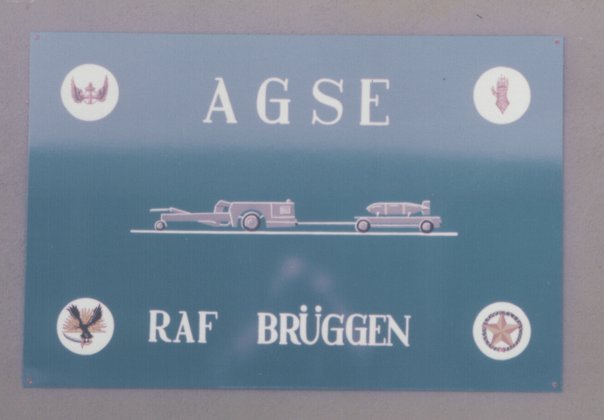
At Bruggen it was called AGSE or Armament Ground Support Equipment,in fact,it was called AGSE at all the staions I served at.(Kinloss,MPA,Bruggen,Lossie)
This image is hidden for guests.
Replied by spike7451 on topic British Nuclear Weapons info
Sorry forgot to mention GSE when I joined in 64 it was simply GE Ground Equipment . It then became GSE. Tornado GSE was called AGE Aerospace Ground Equipment For Typoon I'm not sure must ask the boys next time I am down the big flying club if its still open !!
At Bruggen it was called AGSE or Armament Ground Support Equipment,in fact,it was called AGSE at all the staions I served at.(Kinloss,MPA,Bruggen,Lossie)
This image is hidden for guests.
Please log in or register to see it.
Please Log in or Create an account to join the conversation.
- Forum
- Open Forum
- Miscellaneous Research Topics
- Research Material, Websites and Useful Links
- British Nuclear Weapons info
Time to create page: 0.072 seconds


![[IMG]/community/68467=4088-red beard.jpg[/img]](/community/68467=4088-red%20beard.jpg)