- Posts: 1643
- Thank you received: 51
- Forum
- Open Forum
- Miscellaneous Research Topics
- Research Material, Websites and Useful Links
- British Nuclear Weapons info
British Nuclear Weapons info
- ted angus
- Offline
- Platinum Member
-

Less
More
21 Feb 2011 13:37 #31
by ted angus
Replied by ted angus on topic British Nuclear Weapons info
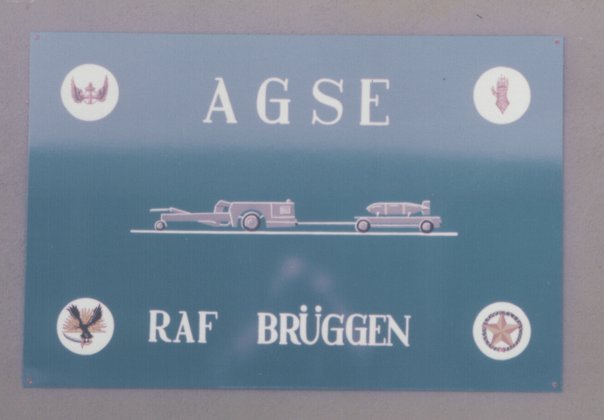
Spike but AGSE just a small specialist element of ground equipment.At Bruggen it was called AGSE or Armament Ground Support Equipment,in fact,it was called AGSE at all the staions I served at.(Kinloss,MPA,Bruggen,Lossie)
This image is hidden for guests.
Please log in or register to see it.
Please Log in or Create an account to join the conversation.
- spike7451
-

- Offline
- Junior Member
-

Less
More
- Posts: 33
- Thank you received: 0
21 Feb 2011 14:02 #32
by spike7451
AGSE at Bruggen was manned by RAF Armourers as well as a couple Gen Tech's & the odd Fairy.. far as I'm aware however I've just asked a mate on Facebook who was on AGSE at Bruggen to confirm.Bruggen's AGSE was opposite the ESA#1 & Kinloss's started off in the ESA#1 before moving into the weapons hanger #1.The was four people on Kinloss's AGSE,(I was on AGSE at Kinloss for a time before moving to the line)A cpl,SACW,Me & another JT,we were all Armourers.
Replied by spike7451 on topic British Nuclear Weapons info
Spike but AGSE just a small specialist element of ground equipment.
AGSE at Bruggen was manned by RAF Armourers as well as a couple Gen Tech's & the odd Fairy.. far as I'm aware however I've just asked a mate on Facebook who was on AGSE at Bruggen to confirm.Bruggen's AGSE was opposite the ESA#1 & Kinloss's started off in the ESA#1 before moving into the weapons hanger #1.The was four people on Kinloss's AGSE,(I was on AGSE at Kinloss for a time before moving to the line)A cpl,SACW,Me & another JT,we were all Armourers.
Please Log in or Create an account to join the conversation.
- Bri21
- Offline
- New Member
-

Less
More
- Posts: 7
- Thank you received: 0
21 Feb 2011 18:28 #33
by Bri21
I stand corrected!
I'll have to choose my words here more carefully.
Of course Blue Danube and Violet Club needed a larger fin span to stop it tumbling, as do all short, stubby bombs. And the larger fins needed to
be flip-outs to fit within the V-Force bomb bays. The old chicken and egg scenario again.
Red Beard had similar issues, being sized to fit the Canberra bomb bay. Although there was more leeway there because RB ended up at 28 in
dia, when the spec was written for a weapon expected to be 30 in dia.
No one had experience of release at the heights and speeds envisaged then. Full-scale testing was all-but impossible because no aircraft
existed that could reach the heights and speeds required. The best that could be done was to use a twin-Armstrong Siddeley Python-engined
Lincoln that struggled to reach 35k ft.
Not generally realised is that these bombs were quite unlike any old iron bombs that preceded them. For starters, their specific gravity was
much lower than iron bombs. Around 25%, partly because they weren't simply stuffed with as much HE as could be crammed in. Lots of internal
space was no heavier than fresh air. And the lower SG had its effect on release behaviour. BD could oscillate nose-up 20° and nose-down 20°
in a period of 0.6 secs. The stresses were something unexpected. We broke lots of fins before getting it right.
And these were big beasts, and heavy at 4½ tons. Any collision with the aircraft wuddna been pleasant for the aircrew.
Bringing that under control was not easy. The larger fins were not cosmetic.
Replied by Bri21 on topic British Nuclear Weapons info
It needed flip-out fins to prevent it tumbling.
The main reason that retractable fins were used was for space saving within the bomb bay otherwise the fins would have been longer and fixed although I accept that bomb bay turbulence during weapon release may also have been a factor.
I stand corrected!
I'll have to choose my words here more carefully.
Of course Blue Danube and Violet Club needed a larger fin span to stop it tumbling, as do all short, stubby bombs. And the larger fins needed to
be flip-outs to fit within the V-Force bomb bays. The old chicken and egg scenario again.
Red Beard had similar issues, being sized to fit the Canberra bomb bay. Although there was more leeway there because RB ended up at 28 in
dia, when the spec was written for a weapon expected to be 30 in dia.
No one had experience of release at the heights and speeds envisaged then. Full-scale testing was all-but impossible because no aircraft
existed that could reach the heights and speeds required. The best that could be done was to use a twin-Armstrong Siddeley Python-engined
Lincoln that struggled to reach 35k ft.
Not generally realised is that these bombs were quite unlike any old iron bombs that preceded them. For starters, their specific gravity was
much lower than iron bombs. Around 25%, partly because they weren't simply stuffed with as much HE as could be crammed in. Lots of internal
space was no heavier than fresh air. And the lower SG had its effect on release behaviour. BD could oscillate nose-up 20° and nose-down 20°
in a period of 0.6 secs. The stresses were something unexpected. We broke lots of fins before getting it right.
And these were big beasts, and heavy at 4½ tons. Any collision with the aircraft wuddna been pleasant for the aircrew.
Bringing that under control was not easy. The larger fins were not cosmetic.
Please Log in or Create an account to join the conversation.
- PETERTHEEATER
-

- Offline
- Platinum Member
-
Less
More
- Posts: 10905
- Thank you received: 772
22 Feb 2011 08:47 #34
by PETERTHEEATER
Replied by PETERTHEEATER on topic British Nuclear Weapons info
Not generally realised is that these bombs were quite unlike any old iron bombs that preceded them. For starters, their specific gravity was
much lower than iron bombs. Around 25%, partly because they weren't simply stuffed with as much HE as could be crammed in. Lots of internal
space was no heavier than fresh air. And the lower SG had its effect on release behaviour.
I'm afraid that you will have to explain that for me again. Do you mean the Centre of Gravity or Centre of Pressure?
much lower than iron bombs. Around 25%, partly because they weren't simply stuffed with as much HE as could be crammed in. Lots of internal
space was no heavier than fresh air. And the lower SG had its effect on release behaviour.
I'm afraid that you will have to explain that for me again. Do you mean the Centre of Gravity or Centre of Pressure?
Please Log in or Create an account to join the conversation.
- Bri21
- Offline
- New Member
-
Less
More
- Posts: 7
- Thank you received: 0
22 Feb 2011 14:14 #35
by Bri21
Neither.
Specific Gravity. SG of water being 1.
Nuclear weapons have considerable volumes filled with precisely nothing (or only fresh air.) Try looking inside electronic equipment. A TV will do. Iron bombs are quite unlike that. Every part of the nose and centrebody are usually crammed with HE (SG approx 1.6). Denser bombs usually have better ballistic and aerodynamic qualities.
Replied by Bri21 on topic British Nuclear Weapons info
Not generally realised is that these bombs were quite unlike any old iron bombs that preceded them. For starters, their specific gravity was
much lower than iron bombs. Around 25%, partly because they weren't simply stuffed with as much HE as could be crammed in. Lots of internal
space was no heavier than fresh air. And the lower SG had its effect on release behaviour.
I'm afraid that you will have to explain that for me again. Do you mean the Centre of Gravity or Centre of Pressure?
Neither.
Specific Gravity. SG of water being 1.
Nuclear weapons have considerable volumes filled with precisely nothing (or only fresh air.) Try looking inside electronic equipment. A TV will do. Iron bombs are quite unlike that. Every part of the nose and centrebody are usually crammed with HE (SG approx 1.6). Denser bombs usually have better ballistic and aerodynamic qualities.
Please Log in or Create an account to join the conversation.
- PETERTHEEATER
-
- Offline
- Platinum Member
-
Less
More
- Posts: 10905
- Thank you received: 772
23 Feb 2011 05:49 #36
by PETERTHEEATER
Replied by PETERTHEEATER on topic British Nuclear Weapons info
The weight of the case counts for nothing then?
Please Log in or Create an account to join the conversation.
- superplum
-

- Offline
- Premium Member
-

Less
More
- Posts: 407
- Thank you received: 2
23 Feb 2011 12:27 #37
by superplum
There wasn't much space inside a WE177!
"Try looking inside electronic equipment. A TV will do. Iron bombs are quite unlike that." Wish they'd taught me that at Halton!
Replied by superplum on topic British Nuclear Weapons info
Neither.
Specific Gravity. SG of water being 1.
Nuclear weapons have considerable volumes filled with precisely nothing (or only fresh air.) Try looking inside electronic equipment. A TV will do. Iron bombs are quite unlike that. Every part of the nose and centrebody are usually crammed with HE (SG approx 1.6). Denser bombs usually have better ballistic and aerodynamic qualities.
There wasn't much space inside a WE177!
"Try looking inside electronic equipment. A TV will do. Iron bombs are quite unlike that." Wish they'd taught me that at Halton!
Please Log in or Create an account to join the conversation.
- WJT
- Visitor
-

07 Apr 2011 20:57 #38
by WJT
Replied by WJT on topic British Nuclear Weapons info
I've put this pic here to link with pics on earlier pages. Seen at a Lincolnshire farm sale in early March 2011. Ideas?
This image is hidden for guests.
Clue: The rear box cross-member is used as a hydraulic oil tank.
This image is hidden for guests.
Please log in or register to see it.
Clue: The rear box cross-member is used as a hydraulic oil tank.
Please Log in or Create an account to join the conversation.
- PETERTHEEATER
-
- Offline
- Platinum Member
-
Less
More
- Posts: 10905
- Thank you received: 772
08 Apr 2011 06:23 #39
by PETERTHEEATER
Replied by PETERTHEEATER on topic British Nuclear Weapons info
Extra clue: The socket either side of the tow hook!
Please Log in or Create an account to join the conversation.
- Smoggieboy
-

- Offline
- Premium Member
-
Less
More
- Posts: 457
- Thank you received: 94
28 May 2013 18:35 #40
by Smoggieboy
Replied by Smoggieboy on topic British Nuclear Weapons info
Just wondering does anyone know how many WE177 are on public display in the UK?
Remember 1 at Cosford Cold War Museum and the last time at Hack Green(12 years am I'm ashamed to say, but trying to go this June) 1 as well.
Remember 1 at Cosford Cold War Museum and the last time at Hack Green(12 years am I'm ashamed to say, but trying to go this June) 1 as well.
Please Log in or Create an account to join the conversation.
- Forum
- Open Forum
- Miscellaneous Research Topics
- Research Material, Websites and Useful Links
- British Nuclear Weapons info
Time to create page: 0.054 seconds