- Posts: 5843
- Thank you received: 567
- Forum
- Open Forum
- Miscellaneous Research Topics
- General Airfield or 20th Century Military Architecture Discussion Topics
- Operation Manna
Operation Manna
- Paul Francis
-
 Topic Author
- Offline
- Moderator
-

Less
More
07 Sep 2010 16:06 #1
by Paul Francis
You can tell a builder from an archaeologist by the size of his trowel. Mine is a small one!
Operation Manna was created by Paul Francis
Operation Manna was organised 1944/45, the purpose of this operation was to drop food to the starving population of Holland. RAF / RCAF Lancasters and USAAF B-17s were loaded with food which were contained in sealed bags, such as powdered milk, eggs and chocolate. With little low-level training the pilots of these aircraft had to fly in and return at 200 feet . The reason for this was that the germans had agreed to a truce provided that the allies flew at 200 feet with guns elevated and along pre-determed corridors.
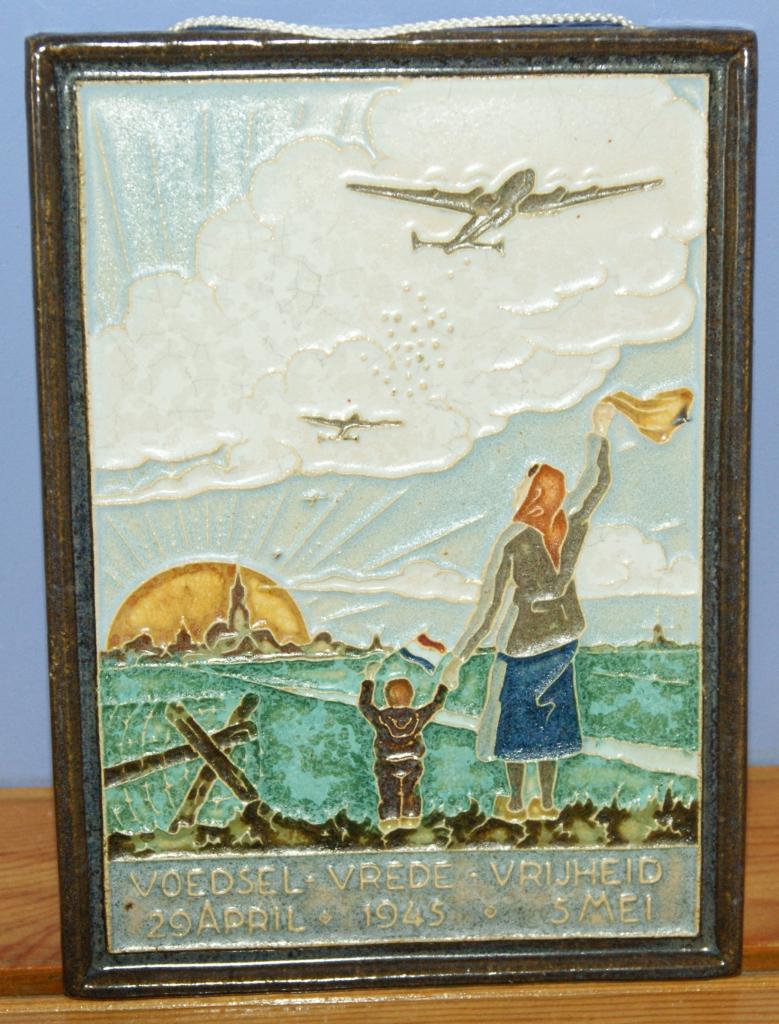
Just post-war, the Dutch company Delft, produced a ceramic plaque to commemorate this event. The picture below is of one that will be bequeathed to the archives and will take pride of place in our memorial room:
Attached files
This image is hidden for guests.
Just post-war, the Dutch company Delft, produced a ceramic plaque to commemorate this event. The picture below is of one that will be bequeathed to the archives and will take pride of place in our memorial room:
Attached files
This image is hidden for guests.
Please log in or register to see it.
You can tell a builder from an archaeologist by the size of his trowel. Mine is a small one!
Please Log in or Create an account to join the conversation.
- cbrjock
-
- Offline
- Premium Member
-

Less
More
- Posts: 594
- Thank you received: 6
08 Sep 2010 07:27 #2
by cbrjock
Replied by cbrjock on topic Operation Manna
Deservedly so, nice one NP.
Please Log in or Create an account to join the conversation.
- PETERTHEEATER
-
- Offline
- Platinum Member
-

Less
More
- Posts: 10905
- Thank you received: 772
08 Sep 2010 08:27 #3
by PETERTHEEATER
Replied by PETERTHEEATER on topic Operation Manna
Paul, what is the provenance of the plaque?
Please Log in or Create an account to join the conversation.
- Paul Francis
-
Topic Author
- Offline
- Moderator
-
Less
More
- Posts: 5843
- Thank you received: 567
09 Sep 2010 20:24 #4
by Paul Francis
You can tell a builder from an archaeologist by the size of his trowel. Mine is a small one!
Replied by Paul Francis on topic Operation Manna
My wife bought the plaque in an antique shop in Scotland. I previously had quickly looked around the shop, saw nothing of interest and sneaked off to the pub. Meanwhile said wife went to the same shop and bought the plaque, I imerged from pub a bit lubricated and she proudly presented me with the plaque 'look what I found'. It was not until a few hours later, that I realised the significance of the plaque. I now claim ownership. That in a nutshell is its providence. Well you did ask!
You can tell a builder from an archaeologist by the size of his trowel. Mine is a small one!
Please Log in or Create an account to join the conversation.
- PETERTHEEATER
-
- Offline
- Platinum Member
-
Less
More
- Posts: 10905
- Thank you received: 772
11 Sep 2010 07:19 #5
by PETERTHEEATER
Replied by PETERTHEEATER on topic Operation Manna
I like it. You got a real nice memento due to a thoughtful wife. I hope that you were suitably chastened? (and she was driving you home.....)
Please Log in or Create an account to join the conversation.
- Paul Francis
-
Topic Author
- Offline
- Moderator
-
Less
More
- Posts: 5843
- Thank you received: 567
11 Sep 2010 07:35 #6
by Paul Francis
You can tell a builder from an archaeologist by the size of his trowel. Mine is a small one!
Replied by Paul Francis on topic Operation Manna
Peter, its called 'teamwork'!
You can tell a builder from an archaeologist by the size of his trowel. Mine is a small one!
Please Log in or Create an account to join the conversation.
- PETERTHEEATER
-
- Offline
- Platinum Member
-
Less
More
- Posts: 10905
- Thank you received: 772
11 Sep 2010 08:36 #7
by PETERTHEEATER
 "To me team" (makes pyramid with hands over head)
Replied by PETERTHEEATER on topic Operation Manna
"To me team" (makes pyramid with hands over head) Please Log in or Create an account to join the conversation.
- Ludford101
- Offline
- New Member
-

Less
More
- Posts: 1
- Thank you received: 0
06 Feb 2013 13:04 #8
by Ludford101
Replied by Ludford101 on topic Operation Manna
Hi ... just joined the forum but am a member of a few other RAF related ones... hope to have some input on the Ludford side of things and have just viewed the excellent photo's posted...
My reply on this thread is due to me recently acquiring an identical plaque that will have a proud place in my collection as I have a few Manna related logbooks... so glad to read about it here...
Regards
Gary
My reply on this thread is due to me recently acquiring an identical plaque that will have a proud place in my collection as I have a few Manna related logbooks... so glad to read about it here...
Regards
Gary
Please Log in or Create an account to join the conversation.
- Peter Kirk
-

- Offline
- Moderator
-
Less
More
- Posts: 12446
- Thank you received: 1029
02 Jan 2017 17:10 #9
by Peter Kirk
No Amount Of Evidence Will Ever Persuade An Idiot (probably not Mark Twain)
Replied by Peter Kirk on topic Operation Manna
I have been trawling though aircrew logbooks available online for additional range information and dates and I found a number of references to "SUPPLY DROPPING PRACTICE" around the second week of April 1945, two examples being 75 squadron at Mepal and 218 squadron at Chedburgh. One particularly interesting entry was on 12 April 1945 for a Lancaster of 218 squadron where the entry was LLB with 12 sandbags on base at 500 feet. This seems to imply that sandbags were used for this training, which makes sense, and that the drop zone was the home airfield itself.
I wonder if this was copied by all the units involved and was the airfield used so the sandbags could be recovered for another crew to use? Would they have survived the drop? Next question is would the sandbags have been thrown out the bomb bay or could the bomb bay doors support the load until opened?
I wonder if this was copied by all the units involved and was the airfield used so the sandbags could be recovered for another crew to use? Would they have survived the drop? Next question is would the sandbags have been thrown out the bomb bay or could the bomb bay doors support the load until opened?
No Amount Of Evidence Will Ever Persuade An Idiot (probably not Mark Twain)
Please Log in or Create an account to join the conversation.
- PETERTHEEATER
-
- Offline
- Platinum Member
-
Less
More
- Posts: 10905
- Thank you received: 772
03 Jan 2017 10:01 #10
by PETERTHEEATER
Replied by PETERTHEEATER on topic Operation Manna
\the military issue sandbags of that era were hessian and would certainly have split on impact from 500 feet. It is likely, however, that they were not fully filled and were lighter.
There was no access into the bomb bays of most RAF bomber aircraft so either there was a 'lash-up' to suspend them from bomb carriers (unlikely) or they were laid inside the bomb doors before fully closing. Twelve filled bags would be easily supported. on a Lanc bomb doors.
There was no access into the bomb bays of most RAF bomber aircraft so either there was a 'lash-up' to suspend them from bomb carriers (unlikely) or they were laid inside the bomb doors before fully closing. Twelve filled bags would be easily supported. on a Lanc bomb doors.
Please Log in or Create an account to join the conversation.
- Forum
- Open Forum
- Miscellaneous Research Topics
- General Airfield or 20th Century Military Architecture Discussion Topics
- Operation Manna
Time to create page: 0.060 seconds