- Posts: 10905
- Thank you received: 772
- Forum
- Open Forum
- Miscellaneous Research Topics
- General Airfield or 20th Century Military Architecture Discussion Topics
- Runway / Railway Safety Signalling
Runway / Railway Safety Signalling
- PETERTHEEATER
-

- Offline
- Platinum Member
-

Less
More
19 Mar 2011 09:09 #11
by PETERTHEEATER
Thanks David, I now understand. I thought the wires were higher and further back on the approaches.
Replied by PETERTHEEATER on topic Runway / Railway Safety Signalling
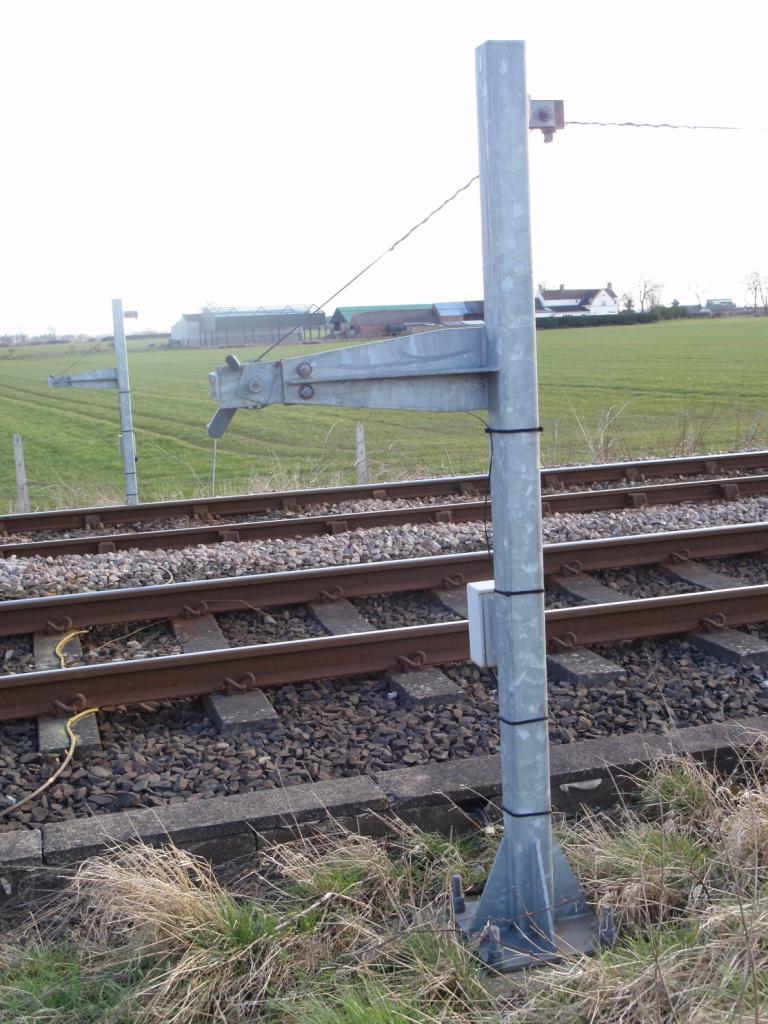
From memory the trip wires are on both sides of the track , it's a double track , and are suspended above the height of the rail on pole's . If an aircraft lands on the railway it breaks the wires and the train signals turn to red . I guess there must also be some form of repeater signal which goes to the nearest signal box or control room ? I'll go and have a closer look and try and take some photographs .
Thanks David, I now understand. I thought the wires were higher and further back on the approaches.
Please Log in or Create an account to join the conversation.
- canberra
- Offline
- Platinum Member
-
Less
More
- Posts: 5639
- Thank you received: 122
19 Mar 2011 09:24 #12
by canberra
Replied by canberra on topic Runway / Railway Safety Signalling
All I know about the Radlett one is what my dad told me, he was working as a chippy at Handley Pages at the time.
Please Log in or Create an account to join the conversation.
- David Thompson
-

- Offline
- Platinum Member
-
Less
More
- Posts: 1970
- Thank you received: 609
19 Mar 2011 20:23 #13
by David Thompson
Youth is wasted on the young !
Replied by David Thompson on topic Runway / Railway Safety Signalling
I went to Teesside Airport today and found 12 pairs of poles either side of the track running from Carter's Lane to the east , see GE , and to a small copse near a wartime dispersal to the west , you can see the shadows of some of the poles on GE . The tubular poles are around 6 feet in height but are mounted below track level so are between 4 to 5 feet above the actual track with the wire running through an eyelet at the top of the pole . The trip wire is actually a 2 core electrical cable , similar to bell wire , and is terminated at both ends into junction boxes with a cable from the j/b going into some trackside trunking and off to the signals . The posts at Carter's Lane have a tensioning device to keep the wire taut . I took some photographs and will forward them to NorwichPaul to post . I asked a friend who worked on the railways about these wires and his reply was (a bit long but bear with it !) ;
Yep, basically you already have the nuts and bolts of it. The wires at Teesside are
the 'switch' which as you rightly surmise, in the event of a plane coming in short
the wires would be cut, and the signals would drop back to red. There is / was for
sure one in the box at urlay nook, which was the controlling box until a few years
ago, and as Tyneside now has control over that, it will be repeated in there as well.
I dont think theres any kind of signal or control in the ATC - its been one of those
questions ive thought of many times but never at the right time to ask anyone. but i
know someone who might. i'll drop him an email and ask.
The type of signalling along there ( in fact probably 80% of the country) is 'Track
Circuit Block', which basically means that the signals are controlled by the trains
passage along the track, activating electrical relays etc via a current being shorted
between the rails by the train, thus completing a circuit (hence track circuit) .
The majority of such signals work automatically with no interaction on the part of
the signalman, some only with an indicator light on the signalling panel, sometimes
not even that. this is a fundamental design feature brought about by the
introduction of the new electric signals in the 50s and 60s, and basically meant that
amalgamation of 30 or more signal boxes into one meant that to address the problem of
the number of signalmen and the size of the panel required to physically control each
individual signal if the conventional one for one controls were retained, a degree of
automating the process was brought about as there as no other real alternative other
than to increase the size of the signal box to absolutely gigantic proportions with
20 or more signalman.
To a small degree in some places this was done (london bridge was one, three bridges
another) , but its mainly in commuterland with thier high track density, and even
with the technological advances of the nx system in the 70s it had its limitations.
some rationalisation did occur with the introduction of electrically controlled
semaphores, driven by an electric motor activated by the lever in the box. this meant
that ie one in 3 boxes could be done away with and the remaining semaphores were
electrified like this or the signals totally replaced with colour lights and new
signal boxes covering 20 or 30 miles were built. Before the 2 IECCs up here, we had:
Newcastle, Tyne Yard, Darlington, Northallerton, Thirsk, Tollerton, and York (main).
there were 3 boxes at York (the York yard North & South boxes controlled the yards
and goods lines, york main did the main lines and station). After york was Selby
then Doncaster. 20 years ago we effectively ended up with six signal boxes between
Berwick and London. Tyneside IECC, Morpeth, York IECC, Doncaster, Peterborough, Kings
Cross, which is what we still have. In most TCB areas, theres a semi-automatic
signal or latterly an automatic signal with a signal replacement key every 5 or 10
miles, purely to give some degree of override and control.
Back with semaphore signaling, signal boxes were usually no more than a mile to a
mile and a half apart, because the signals were directly connected to the lever in
the signal box by a wire, and that was about the maximum distance signalman could
physically pull. hernias in signalman were a very common occurrence! Problem was
that semaphore signals clear to off when the wire is pulled, and there have been
several accients over the years because things have fallen on the wires, clearing the
signals when theres been trains, or bits of trains laid all over the track.
Originally this wire was an alarm that rang in the boxes either side so that the
signalmen could replace the signals. With advances in signalling in the 60s and 70s
this was changed and the wires linked directly into the signalling system.
Nowadays it is nothing unusual for one signal box to cover well over 100+ miles of
railway, and in fact down south it is probably nearer to 300 miles of track miles
simply because of the high density of railway. some of the signalling centres to
have seven or eight signalman on a massive panel which in some cases can be 20 or 30
yards in length, with the introduction of the NX system and much later and modern
solid state technology in the 90s saw the integrated electronic control centre (IECC)
which is what York and Newcastle signalboxes are. The changeover point between them
is just south of ferryhill. They have 4 or 5 signalmen, plus a supervisor each
working a computer console with 3 or 4 screens that show the signals on a simplistic
track diagram, (which effectively is a signalbox in its own right, but in the same
room as 3 or 4 others...) the vast majority of movements are programmed into the
computer and the signalman normally sits there for 80% of the time and just observes,
working a few trains manually that are not in the system. effectively this means
we've got three signal boxes that work the East Coast main line from Berwick to
Selby. The box at morpeth on the ECML is surprisingly still there, which covers from
just south of the town most of the way to the border, interfacing with tweedmouth box
somewhere near alnwick IIRC, and its always been the plan to shut it and transfer it
en-bloc into the IECC at Tyneside - the panel was there last time i was in about a
hundred years ago with some trainees - its just never got done for some reason,
probably increasing costs.
sorry this is a bit long, your answer really is in para 1. the rest is just
historical filling. I started and i couldnt stop !!
Well I did say it was a bit long and slightly off topic but worth it.....probably . Photo's to follow .
Yep, basically you already have the nuts and bolts of it. The wires at Teesside are
the 'switch' which as you rightly surmise, in the event of a plane coming in short
the wires would be cut, and the signals would drop back to red. There is / was for
sure one in the box at urlay nook, which was the controlling box until a few years
ago, and as Tyneside now has control over that, it will be repeated in there as well.
I dont think theres any kind of signal or control in the ATC - its been one of those
questions ive thought of many times but never at the right time to ask anyone. but i
know someone who might. i'll drop him an email and ask.
The type of signalling along there ( in fact probably 80% of the country) is 'Track
Circuit Block', which basically means that the signals are controlled by the trains
passage along the track, activating electrical relays etc via a current being shorted
between the rails by the train, thus completing a circuit (hence track circuit) .
The majority of such signals work automatically with no interaction on the part of
the signalman, some only with an indicator light on the signalling panel, sometimes
not even that. this is a fundamental design feature brought about by the
introduction of the new electric signals in the 50s and 60s, and basically meant that
amalgamation of 30 or more signal boxes into one meant that to address the problem of
the number of signalmen and the size of the panel required to physically control each
individual signal if the conventional one for one controls were retained, a degree of
automating the process was brought about as there as no other real alternative other
than to increase the size of the signal box to absolutely gigantic proportions with
20 or more signalman.
To a small degree in some places this was done (london bridge was one, three bridges
another) , but its mainly in commuterland with thier high track density, and even
with the technological advances of the nx system in the 70s it had its limitations.
some rationalisation did occur with the introduction of electrically controlled
semaphores, driven by an electric motor activated by the lever in the box. this meant
that ie one in 3 boxes could be done away with and the remaining semaphores were
electrified like this or the signals totally replaced with colour lights and new
signal boxes covering 20 or 30 miles were built. Before the 2 IECCs up here, we had:
Newcastle, Tyne Yard, Darlington, Northallerton, Thirsk, Tollerton, and York (main).
there were 3 boxes at York (the York yard North & South boxes controlled the yards
and goods lines, york main did the main lines and station). After york was Selby
then Doncaster. 20 years ago we effectively ended up with six signal boxes between
Berwick and London. Tyneside IECC, Morpeth, York IECC, Doncaster, Peterborough, Kings
Cross, which is what we still have. In most TCB areas, theres a semi-automatic
signal or latterly an automatic signal with a signal replacement key every 5 or 10
miles, purely to give some degree of override and control.
Back with semaphore signaling, signal boxes were usually no more than a mile to a
mile and a half apart, because the signals were directly connected to the lever in
the signal box by a wire, and that was about the maximum distance signalman could
physically pull. hernias in signalman were a very common occurrence! Problem was
that semaphore signals clear to off when the wire is pulled, and there have been
several accients over the years because things have fallen on the wires, clearing the
signals when theres been trains, or bits of trains laid all over the track.
Originally this wire was an alarm that rang in the boxes either side so that the
signalmen could replace the signals. With advances in signalling in the 60s and 70s
this was changed and the wires linked directly into the signalling system.
Nowadays it is nothing unusual for one signal box to cover well over 100+ miles of
railway, and in fact down south it is probably nearer to 300 miles of track miles
simply because of the high density of railway. some of the signalling centres to
have seven or eight signalman on a massive panel which in some cases can be 20 or 30
yards in length, with the introduction of the NX system and much later and modern
solid state technology in the 90s saw the integrated electronic control centre (IECC)
which is what York and Newcastle signalboxes are. The changeover point between them
is just south of ferryhill. They have 4 or 5 signalmen, plus a supervisor each
working a computer console with 3 or 4 screens that show the signals on a simplistic
track diagram, (which effectively is a signalbox in its own right, but in the same
room as 3 or 4 others...) the vast majority of movements are programmed into the
computer and the signalman normally sits there for 80% of the time and just observes,
working a few trains manually that are not in the system. effectively this means
we've got three signal boxes that work the East Coast main line from Berwick to
Selby. The box at morpeth on the ECML is surprisingly still there, which covers from
just south of the town most of the way to the border, interfacing with tweedmouth box
somewhere near alnwick IIRC, and its always been the plan to shut it and transfer it
en-bloc into the IECC at Tyneside - the panel was there last time i was in about a
hundred years ago with some trainees - its just never got done for some reason,
probably increasing costs.
sorry this is a bit long, your answer really is in para 1. the rest is just
historical filling. I started and i couldnt stop !!
Well I did say it was a bit long and slightly off topic but worth it.....probably . Photo's to follow .
Youth is wasted on the young !
Please Log in or Create an account to join the conversation.
- Paul Francis
-
 Topic Author
- Offline
- Moderator
-

Less
More
- Posts: 5843
- Thank you received: 567
19 Mar 2011 21:30 #14
by Paul Francis
You can tell a builder from an archaeologist by the size of his trowel. Mine is a small one!
Replied by Paul Francis on topic Runway / Railway Safety Signalling
David here are a couple of your photos.
Attached files
This image is hidden for guests.
This image is hidden for guests.
Attached files
This image is hidden for guests.
Please log in or register to see it.
This image is hidden for guests.
Please log in or register to see it.
You can tell a builder from an archaeologist by the size of his trowel. Mine is a small one!
Please Log in or Create an account to join the conversation.
- David Thompson
-
- Offline
- Platinum Member
-
Less
More
- Posts: 1970
- Thank you received: 609
19 Mar 2011 22:43 #15
by David Thompson
Youth is wasted on the young !
Replied by David Thompson on topic Runway / Railway Safety Signalling
Thanks NP . Photo 1 shows the wire at the west end with the wartime dispersal's behind the trees while Photo 2 shows the post's at Carter's Lane with the tensioning device .
Youth is wasted on the young !
Please Log in or Create an account to join the conversation.
- PETERTHEEATER
-
- Offline
- Platinum Member
-
Less
More
- Posts: 10905
- Thank you received: 772
20 Mar 2011 03:37 #16
by PETERTHEEATER
Replied by PETERTHEEATER on topic Runway / Railway Safety Signalling
Thanks David and Paul, an interesting fact that I was not aware of.
Please Log in or Create an account to join the conversation.
- canberra
- Offline
- Platinum Member
-
Less
More
- Posts: 5639
- Thank you received: 122
20 Mar 2011 10:51 #17
by canberra
Replied by canberra on topic Runway / Railway Safety Signalling
So is this system unique to Teesside airport? Having been stationed at two RAF stations with railways nearby(Leuchars and Turnhouse) I cant ever recall seeing something like this.
Please Log in or Create an account to join the conversation.
- Smoggieboy
-

- Offline
- Premium Member
-

Less
More
- Posts: 457
- Thank you received: 94
20 Mar 2011 12:25 #18
by Smoggieboy
Replied by Smoggieboy on topic Runway / Railway Safety Signalling
From 2 lots of work experience in Teesside ATC many years ago(ok making and drinking tea !) I can't remember anything in the tower connected with the track. I asked at the time did they have any control over the trains and got a funny look with a firm no !
Please Log in or Create an account to join the conversation.
- PETERTHEEATER
-
- Offline
- Platinum Member
-
Less
More
- Posts: 10905
- Thank you received: 772
21 Mar 2011 08:29 #19
by PETERTHEEATER
Replied by PETERTHEEATER on topic Runway / Railway Safety Signalling
Ballykelly had a similar 'train control' It was discussed here:
/community/showthread.php?1687-Ballykelly&highlight=ballykelly
/community/showthread.php?1687-Ballykelly&highlight=ballykelly
Please Log in or Create an account to join the conversation.
- REF
-

- Offline
- Platinum Member
-
Less
More
- Posts: 9794
- Thank you received: 652
25 Mar 2011 12:00 #20
by REF
Replied by REF on topic Runway / Railway Safety Signalling
Please Log in or Create an account to join the conversation.
- Forum
- Open Forum
- Miscellaneous Research Topics
- General Airfield or 20th Century Military Architecture Discussion Topics
- Runway / Railway Safety Signalling
Time to create page: 0.055 seconds