- Posts: 5566
- Thank you received: 1369
- Forum
- Open Forum
- Miscellaneous Research Topics
- General Airfield or 20th Century Military Architecture Discussion Topics
- Surviving wartime 'Earthquake' Bombs
Surviving wartime 'Earthquake' Bombs
- netcompsys
-

- Offline
- Moderator
-

Less
More
04 Jul 2013 19:59 #11
by netcompsys
kevin
Replied by netcompsys on topic Surviving wartime 'Earthquake' Bombs
The replica Bouncing bomb I remember is at Scamptons Museum in the old 617 hangar, (Sept 2010)
[IMG]/community/128428=12925-sep10 126a.jpg[/img]
They also have a third size(?) model
[IMG]/community/128428=12924-Sep11 288a.jpg[/img]
Newark has a Bouncing Bomb on loan from the RAF (Oct 2012)
[IMG]/community/128428=12923-Oct12 Newark 204a.jpg[/img]
heres a pic of Elvingtons Tallboy in May 2012
[IMG]/community/128428=12922-may12 001a.jpg[/img]
At some point you will need to summarise all this, type, location, condition, date, photo ...
kevin
[IMG]/community/128428=12925-sep10 126a.jpg[/img]
They also have a third size(?) model
[IMG]/community/128428=12924-Sep11 288a.jpg[/img]
Newark has a Bouncing Bomb on loan from the RAF (Oct 2012)
[IMG]/community/128428=12923-Oct12 Newark 204a.jpg[/img]
heres a pic of Elvingtons Tallboy in May 2012
[IMG]/community/128428=12922-may12 001a.jpg[/img]
At some point you will need to summarise all this, type, location, condition, date, photo ...
kevin
kevin
Please Log in or Create an account to join the conversation.
- ancientarmourer
- Offline
- Junior Member
-

Less
More
- Posts: 70
- Thank you received: 1
04 Jul 2013 20:08 #12
by ancientarmourer
Replied by ancientarmourer on topic Surviving wartime 'Earthquake' Bombs
Correct. Bay 10 (the armament workshops) had both 12,000 and 24,000lb bombs, the Grand Slam was on the floor and the Tallboy was on a Type "H" trolley. My class had the dubious pleasure of pushing the Tallboy out of Bay 10, along Swann Road to Main Point, across Main Point then along Stable Road where we dumped it in a yard. The grand Slam was still there when I graduated in August 1958. We also dismantled the last B17 turret in the workshop.
Please Log in or Create an account to join the conversation.
- WJT
- Visitor
-

04 Jul 2013 20:21 #13
by WJT
Replied by WJT on topic Surviving wartime 'Earthquake' Bombs
Hi MM: When I was at Marham myself, long after Project Ruby, our OC Arm Eng Sqn was the son of the Gp Capt who had been the Commandant of the CBE at the time of Project Ruby. Jim showed me some of his late Father's memorabilia of his time at the CBE, including reports on Ruby.
From what I recall, they only flew single Grand Slams on the B-29s at Marham, digging a hole in the ground, dumping the bomb in the hole, then parking the aircraft over the hole and winching the bomb up into the modified bomb bays. I don't think they ever flew from Marham with two Grand Slams - I think the runway would have been too short. Incidentally, the B-29 was the only aircraft which could lift a Grand Slam to its design release altitude - 40,000 ft.
From what I recall, they only flew single Grand Slams on the B-29s at Marham, digging a hole in the ground, dumping the bomb in the hole, then parking the aircraft over the hole and winching the bomb up into the modified bomb bays. I don't think they ever flew from Marham with two Grand Slams - I think the runway would have been too short. Incidentally, the B-29 was the only aircraft which could lift a Grand Slam to its design release altitude - 40,000 ft.
Please Log in or Create an account to join the conversation.
- David Thompson
-
 Topic Author
- Offline
- Platinum Member
-

Less
More
- Posts: 1970
- Thank you received: 609
04 Jul 2013 20:43 #14
by David Thompson
Youth is wasted on the young !
Replied by David Thompson on topic Surviving wartime 'Earthquake' Bombs
Thanks to everyone who has contributed to the thread so far as I never expected so many replies in such a short space of time ! I only started the thread because I couldn't see a suitable thread for the Halton and Wittering stories but as ancientarmourer testifies above , the Halton story is correct . Perhaps other large HE bombs rather like the ones at Wittering which my friend 'found' were not commonplace but at the same time not unusual rather like some wartime aircraft surviving into the 1950's in lesser roles or being withdrawn from use only to be destroyed without much thought of their historical value ? Well , probably any thought really !
Not wanting to go off topic but mention of the Marham bomb loading pits by mawganmad reminds me of the specially dug pits at Oulton used to load the Jostle radar into the B17's of 214 Squadron . I wonder if there is any sign of those today ?
Thanks again for everyones input .
Not wanting to go off topic but mention of the Marham bomb loading pits by mawganmad reminds me of the specially dug pits at Oulton used to load the Jostle radar into the B17's of 214 Squadron . I wonder if there is any sign of those today ?
Thanks again for everyones input .
Youth is wasted on the young !
Please Log in or Create an account to join the conversation.
- PETERTHEEATER
-

- Offline
- Platinum Member
-
Less
More
- Posts: 10905
- Thank you received: 772
05 Jul 2013 09:20 #15
by PETERTHEEATER
Replied by PETERTHEEATER on topic Surviving wartime 'Earthquake' Bombs
The official US trials report to qualify the 12k bomb for carriage and dropping from the B29 airplane describes the method of loading as prepositioning the bomb on a low wooden cradle with sufficient clearance to get the hoisting slings under. The aircraft was then pushed back over the bomb the critical requirement being the fore and aft alignment relative to the airplane. The use of a hole would seem to make more work since in either case the bomb had to craned off the delivery trolley (trailer) onto the pavement or into the hole. The bomb doors were modified to accommodate the bomb diameter. So, why the difference in the RAF B29 procedure?
Please Log in or Create an account to join the conversation.
- WJT
- Visitor
-
05 Jul 2013 10:38 #16
by WJT
Replied by WJT on topic Surviving wartime 'Earthquake' Bombs
Peter: If you look at the second page of the article on Flight Global on MM's first link, you will see a pic of the Grand Slam in its trench and a B-29 being pushed over it. I suspect that this 'agricultural' method was adopted in 1946 in the absence of any real thought having gone into the problem at that stage.
Please Log in or Create an account to join the conversation.
- PETERTHEEATER
-
- Offline
- Platinum Member
-
Less
More
- Posts: 10905
- Thank you received: 772
05 Jul 2013 12:40 #17
by PETERTHEEATER
Replied by PETERTHEEATER on topic Surviving wartime 'Earthquake' Bombs
I can't see that photo (using tablet PC) but I just realised the answer. The trials report is on Tallboy that was smaller diameter than Grand Slam so the GS wouldn't fit under the aircraft, hence the use of a pit. Same solution was used for the Fat Man nuclear drpped on Japan.
Please Log in or Create an account to join the conversation.
- netcompsys
-
- Offline
- Moderator
-
Less
More
- Posts: 5566
- Thank you received: 1369
21 Jul 2013 14:02 #18
by netcompsys
kevin
Replied by netcompsys on topic Surviving wartime 'Earthquake' Bombs
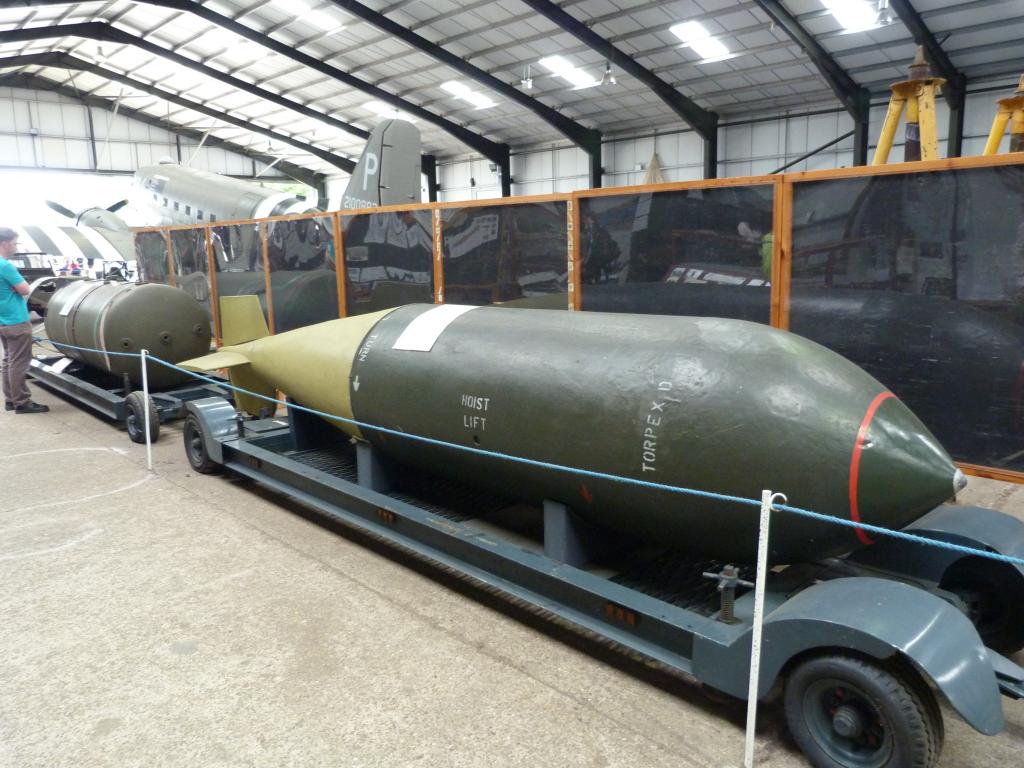
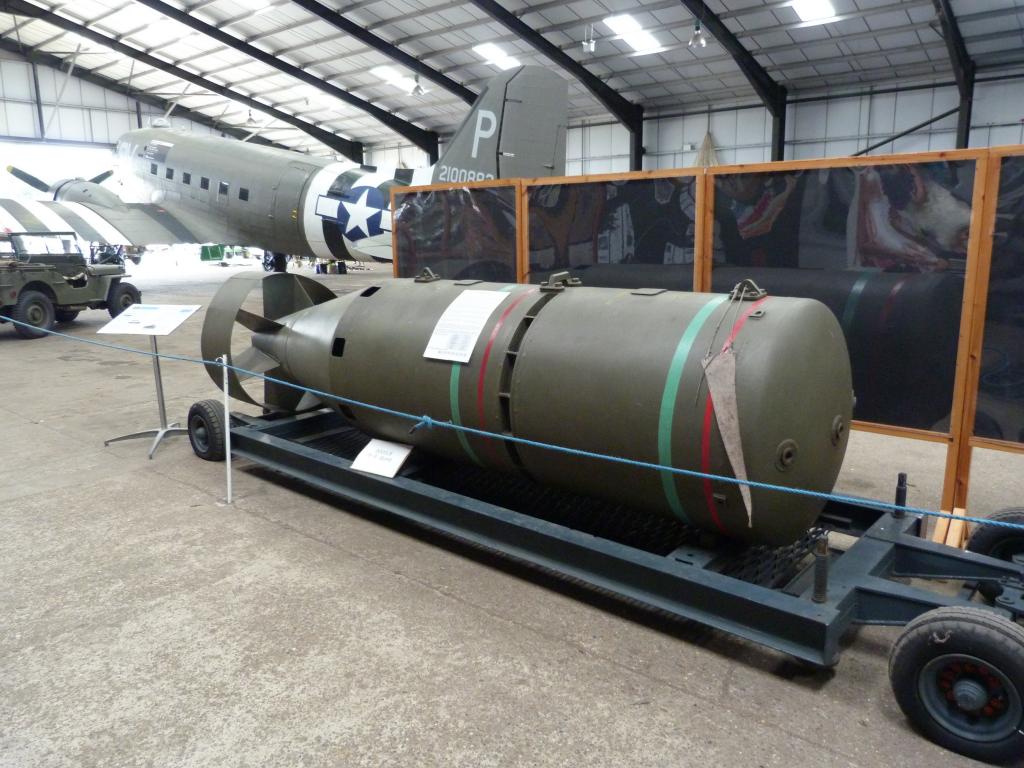
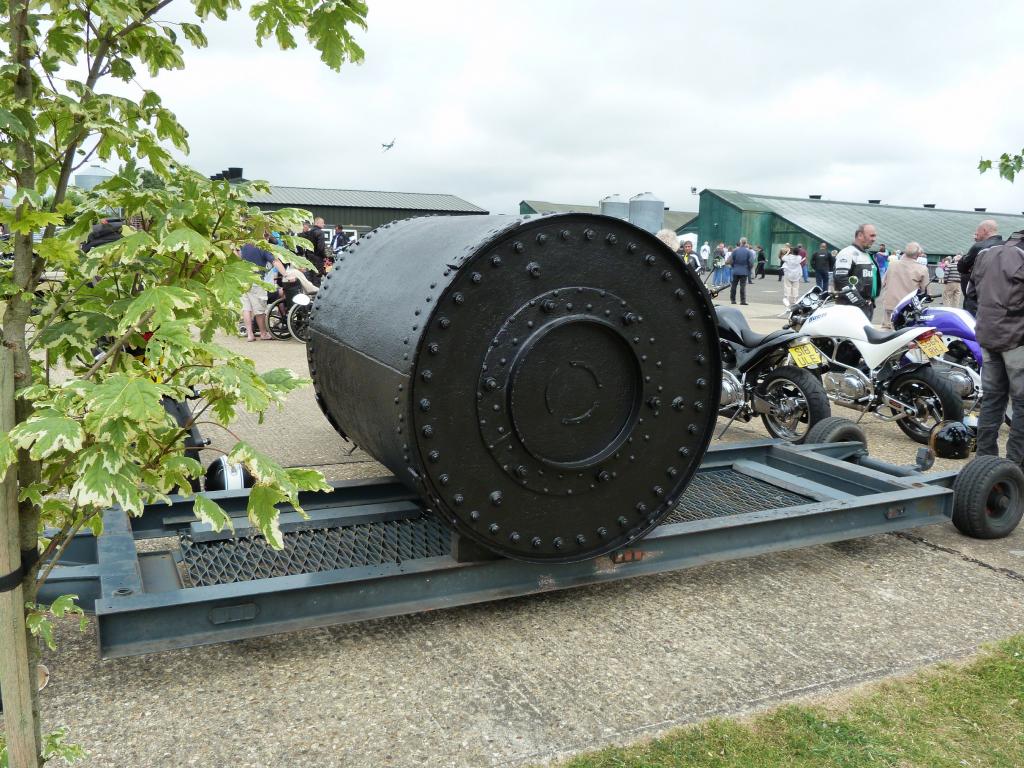
From my visit to East Kirkby yesterday for their Bomber Day
Labeled as Tallboy
This image is hidden for guests.
Labeled as 8000lb H E Bomb
This image is hidden for guests.
Bouncing Bomb /Upkeep mine
This image is hidden for guests.
Sally B above and behind
Kevin
Labeled as Tallboy
This image is hidden for guests.
Please log in or register to see it.
Labeled as 8000lb H E Bomb
This image is hidden for guests.
Please log in or register to see it.
Bouncing Bomb /Upkeep mine
This image is hidden for guests.
Please log in or register to see it.
Sally B above and behind
Kevin
kevin
Please Log in or Create an account to join the conversation.
- netcompsys
-
- Offline
- Moderator
-
Less
More
- Posts: 5566
- Thank you received: 1369
10 Sep 2013 13:35 #19
by netcompsys
kevin
Replied by netcompsys on topic Surviving wartime 'Earthquake' Bombs
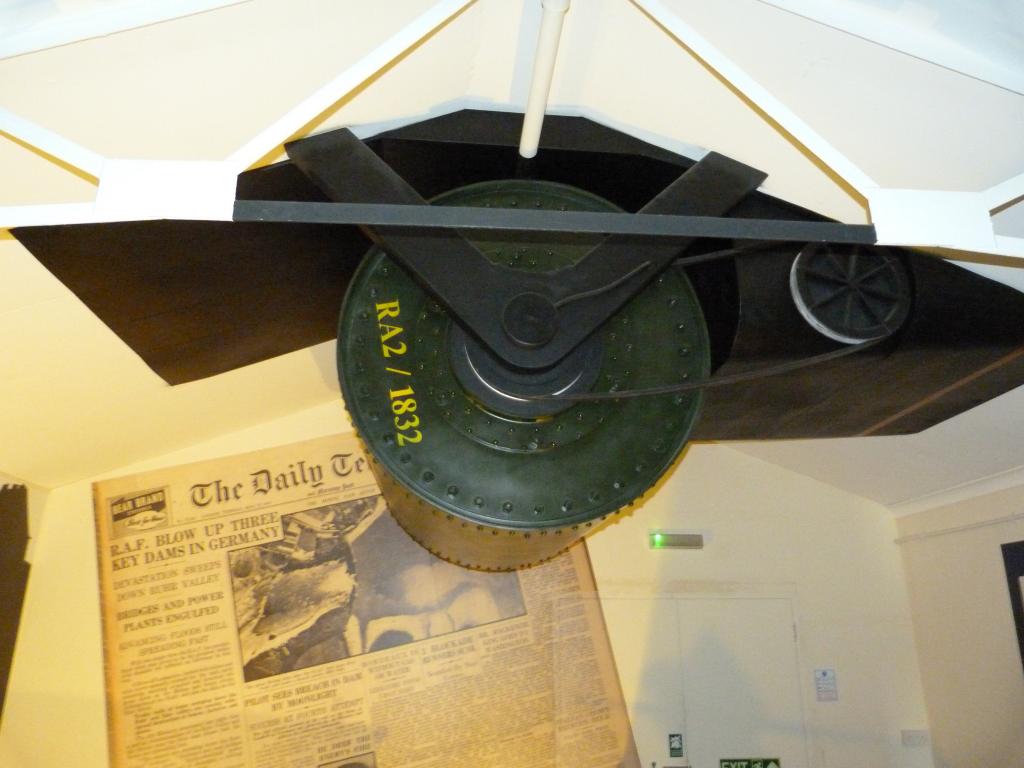
Elvingtons scale model Bouncing bomb installation hanging from the roof in the Barnes Wallis exhibition
This image is hidden for guests.
kevin
This image is hidden for guests.
Please log in or register to see it.
kevin
kevin
Please Log in or Create an account to join the conversation.
- nacluv
- Offline
- New Member
-

Less
More
- Posts: 14
- Thank you received: 0
02 Oct 2013 15:53 #20
by nacluv
Replied by nacluv on topic Surviving wartime 'Earthquake' Bombs
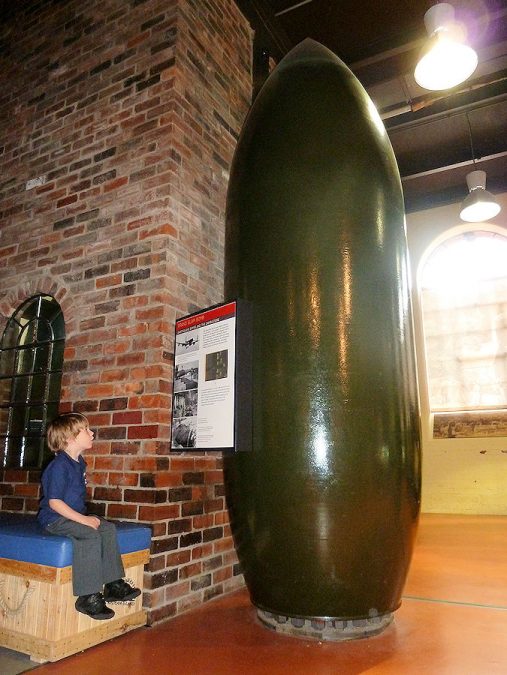
The museum at Kelham Island, Sheffield, also has a (tail-less) grand Slam on show.
This image is hidden for guests.
This image is hidden for guests.
Please log in or register to see it.
Please Log in or Create an account to join the conversation.
- Forum
- Open Forum
- Miscellaneous Research Topics
- General Airfield or 20th Century Military Architecture Discussion Topics
- Surviving wartime 'Earthquake' Bombs
Time to create page: 0.082 seconds

![[IMG]/community/128428=12925-sep10 126a.jpg[/img]](/community/128428=12925-sep10%20126a.jpg)
![[IMG]/community/128428=12924-Sep11 288a.jpg[/img]](/community/128428=12924-Sep11%20288a.jpg)
![[IMG]/community/128428=12923-Oct12 Newark 204a.jpg[/img]](/community/128428=12923-Oct12%20Newark%20204a.jpg)
![[IMG]/community/128428=12922-may12 001a.jpg[/img]](/community/128428=12922-may12%20001a.jpg)